On this page
Six dials, not one
'It gets faster' is what players usually say and it is rarely the main thing happening. There are six dials in the library, and knowing which one is turning tells you what to practise.
| Dial | What it feels like | Where |
|---|---|---|
| Spacing | Less time between decisions | Every runner |
| Density | More things on screen at once | Falling Monster Frenzy, wave games |
| Window width | Timing that has to be exact | One-Tap Monster, Shadow Beast |
| Combination | Two mechanics at once | Monster Castle, Monster Tower |
| Space | Less room to manoeuvre | Ultimate Monster Challenge, Monster Tunnel |
| Resource drain | The thing keeping you alive runs out faster | Monster Cave Quest, Monster Hunter Dash |
Spacing: the dial behind most runner deaths
In runners the obvious change is speed, and the meaningful change is spacing. The generator enforces a minimum gap derived from how long you are committed after handling an obstacle, plus a reaction allowance that shrinks from about 420 milliseconds to a floor of 260.
From the player's side this feels like the game 'stopping giving you a break'. In practice it means your commitment length matters more and more: at a 260-millisecond allowance, a held jump is the difference between handling the next obstacle and not.
If spacing is what beats you, the thing to practise is shortening responses rather than speeding up reactions.
Density and window width feel similar and are not
Density — more objects at once — is a selection problem. You have enough time to act, but too many things to track, so the skill is filtering: reading which objects matter and ignoring the rest. Falling Monster Frenzy solves this for you by making size signal speed, so arrival order is readable at a glance.
Window width is an execution problem. You know exactly what to do and the margin for doing it has shrunk. The skill is precision, and it improves by slowing down rather than speeding up.
Telling them apart matters because the remedies are opposite. Against density, look wider. Against a narrow window, look narrower.
Space as a dial
The most interesting dial and the least used elsewhere. Ultimate Monster Challenge shrinks its arena permanently at waves ten, twenty and thirty, until by wave thirty the fighting area is about a third of its original size.
This does not make anything faster. It makes a habit stop working: wide circling, which is how most players survive early waves, becomes impossible. Players who rely on kiting hit a wall at exactly wave twenty and need several sessions to adapt to short precise repositioning.
That is a better kind of difficulty than raw speed, because the answer is a different skill rather than more of the same one.
Working out which dial is beating you
- Did you know what to do and fail to do it in time? Spacing or window width. Shorten your commitments; aim more precisely.
- Did you fail to notice something? Density. Widen your gaze and use whatever signal the game gives for arrival order.
- Did two things happen at once and you handled one? Combination. Practise the individual mechanics in a gentler game.
- Did you run out of room? Space. Your habitual movement pattern has stopped fitting.
- Did the run simply end while you were doing fine? Resource drain. You are being efficient at the wrong thing — usually collecting rather than progressing.
What does not escalate
Worth listing, because knowing what stays constant is as useful as knowing what rises.
- Your own abilities. Dash cooldowns, jump height and attack speed never degrade over a run.
- Telegraph clarity. Tells get shorter in some games and never get less visible.
- Fairness constraints. The minimum-gap rule applies at second one and at minute ten.
- Enemy damage per hit. The same attack always costs the same, so health management is planning rather than hoping.
That last one matters more than it sounds. If damage scaled with time, a player could not reason about how many hits they could afford, and every health decision would become a guess.
The four dials
Difficulty rises through four independent parameters, and knowing which one a given game is turning tells you what to practise.
- Speed. Everything moves faster. Compresses reaction windows without changing what you must do.
- Density. More things on screen. Tests attention and routing rather than reflexes.
- Variety. New hazard and creature types appear. Tests classification — knowing which response each needs.
- Precision. Gaps narrow and windows shorten. Tests execution.
Most games turn two of these and leave the others alone. A runner usually escalates speed and density; a battle game escalates density and variety; a reflex game escalates speed and precision. Recognising the pair tells you whether your next session should be spent on reading, routing or input accuracy.
Why you can feel the curve flatten
Around the two-to-three minute mark, most endless games stop feeling like they are getting harder, and that perception is accurate.
The curve approaches a ceiling rather than rising indefinitely, so by that point difficulty is changing very slowly. What replaces escalation as the thing that ends runs is concentration — and concentration degrades on a schedule of its own.
This is worth knowing because it tells you what a long run actually requires. Past the flattening point you are not being asked to be better, you are being asked to remain consistent, which is a different skill and one that responds to session length and fatigue rather than to practice.
Key takeaways
- Six dials raise difficulty, and 'it gets faster' is usually the wrong description.
- Spacing beats runners: the fix is shorter commitments, not faster reactions.
- Density is a filtering problem and window width is a precision problem — the remedies are opposite.
- Shrinking space makes a habit stop working rather than making anything faster.
Frequently asked questions
Does the game get faster or just harder?
Usually both, but speed is rarely the main change. Spacing, density and combination do most of the work.
Why does Ultimate Monster Challenge shrink the arena?
Because it invalidates wide kiting, which forces a genuinely different skill rather than more of the same one.
How do I tell which dial is beating me?
Ask whether you knew what to do. If yes, it is spacing or window width. If no, it is density or combination.
Does enemy damage increase over a run?
Do my own abilities get weaker as difficulty rises?
Why does a run feel hardest right before it ends?
Do all games escalate in the same way?

Alex Morgan
Browser Games Editor & Interactive Gaming Content Specialist
Alex Morgan is the editorial byline for everything published on Monster Arcade — the design notes behind all 30 original games, the strategy guides, and the tuning decisions that set every difficulty curve on the site. More about our editorial byline.
Published · Last updated
Games mentioned in this guide
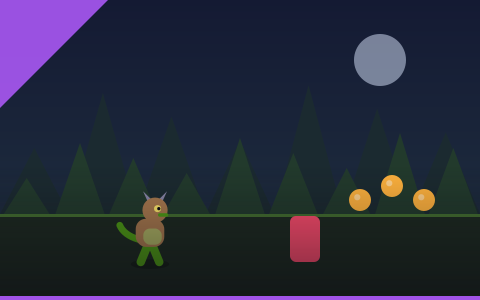
Monster Dash
Two actions, endless forest, instant restart. The best first game on the site.
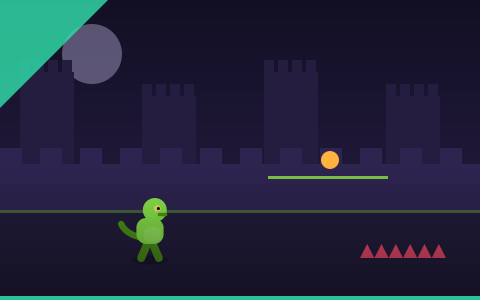
Falling Monster Frenzy
Dodge what falls, catch what glows. Two inputs and an increasingly crowded ceiling.
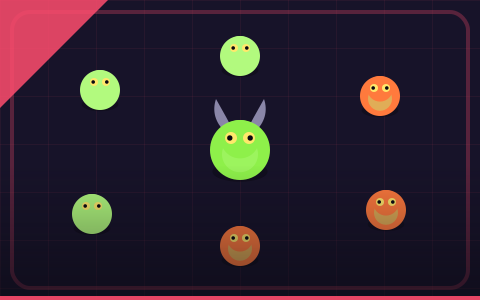
Ultimate Monster Challenge
The hardest game here. Endless waves punctuated by a boss every fifth round, in a shrinking arena.

Monster Tunnel
Thread a narrowing tunnel with two inputs. The smoothest difficulty curve on the site.