On this page
- A level is a sentence about a mechanic
- Introduce alone, then combine
- The first level should be almost free
- Irreversibility is the one thing to be careful with
- Pacing within a level
- Making a generator do the same job
- Testing a level properly
- Cut the level you are proudest of
- Teach, test, combine
- Readability beats surprise
- Playtesting without a playtest team
A level is a sentence about a mechanic
The most useful reframing we know: a level is not a space, it is a statement. Every level should be saying one thing about one mechanic, and you should be able to write that thing down in a sentence before you place a single platform.
'Crumbling stone holds for less time than you think' is a level. 'A corridor with some stuff in it' is not, and it will not be interesting no matter how long you spend arranging the stuff.
This is also the fastest way to find a bad level. If you cannot write the sentence, the level is decoration.
Introduce alone, then combine
The rule that governs every hand-built level set in the library: a mechanic appears on its own before it appears in combination, and never in a hard arrangement first.
Here is the full structure of Monster Castle's eight levels, which exists entirely to demonstrate this:
| Level | The sentence | New | Combined |
|---|---|---|---|
| 1 — The Gatehouse | This is what a jump feels like | Gaps | — |
| 2 — The Long Hall | Wardens turn at platform edges | Warden | — |
| 3 — Rotten Stair | Crumbling stone is for crossing, not standing | Crumble | — |
| 4 — Blade Gallery | Blades are safest at the ends of their arc | Blade | — |
| 5 — Locked Keep | Sometimes you have to go back | Key | Warden + spikes |
| 6 — Shifting Bridge | Board a moving platform after it reverses | Moving | Warden |
| 7 — Collapsing Spire | Two timed hazards at once | — | Crumble + blade |
| 8 — The Throne | Everything, chained | — | All four |
Note that levels 1 to 4 introduce one thing each and combine nothing. That is half the set spent teaching, which feels indulgent while you are building it and is the reason level 8 is satisfying rather than frustrating.
The first level should be almost free
Monster Castle's first level has no hazard at all — just a gap and three gems. Players routinely finish it in under fifteen seconds and some tell us it is pointless.
It is not. It does three things that nothing else can do as cheaply:
- It calibrates the jump. Every player learns how far a tap goes versus a hold, in a place where being wrong costs nothing.
- It establishes the vocabulary. Platforms look like this, gems look like this, the exit looks like this.
- It produces one success. A player who has finished something is in a different state from one who has not, and that difference persists for several levels.
The same logic applies to the first thirty seconds of an endless game. It is not wasted time, it is the only opportunity you get to teach without pressure.
Irreversibility is the one thing to be careful with
Pixel Monster Adventure contains the only genuinely punishing design decision in the library: a block puzzle you can make unsolvable by pushing a block the wrong way.
We kept it because irreversibility creates a kind of tension nothing else does — you have to think before you act, which is otherwise rare in an arcade game. But it comes with two mandatory mitigations:
- It is signposted clearly before you touch a block.
- It is never permanent. Leaving the wing and re-entering resets the blocks, so the worst case is a walk rather than a lost run.
Without the second one it would simply be a trap, and traps are the thing this whole guide is arguing against. The distinction is whether a mistake costs you a decision or costs you the run.
Pacing within a level
A good level has a shape, and the shape is roughly: easy, hard, easy, hardest, release.
The second easy stretch matters more than it looks. After a difficult section, a player needs somewhere to re-establish rhythm before the hardest part — otherwise the hardest part is attempted in a rattled state and reads as unfair.
In practice, in a single-screen level this means: an obvious opening, a real challenge, a wide platform with nothing on it, the actual test, then the exit immediately afterwards. The wide platform with nothing on it is the piece that gets cut first and should be cut last.
A useful diagnostic: if playtesters consistently fail at the same point AND describe the level as unfair, the problem is usually the section before it rather than the section they failed at.
Making a generator do the same job
A procedural generator cannot write sentences, so the teaching has to be encoded as constraints. Monster Tower does this with tagged chunk templates and a minimum floor for each tag.
| Template | Requires | Not before floor |
|---|---|---|
| Plain | Nothing | 1 |
| Gap | A jump | 2 |
| Steps | Height judgement | 3 |
| Moving platform | Timing a board | 5 |
| Thin platform | Knowing you can drop through | 6 |
| Spikes | Precision landing | 8 |
| Crumbling | Not stopping | 11 |
| Narrow | Gap + precision together | 14 |
| Gauntlet | Moving + crumbling together | 20 |
The generator also weights templates by how far past their minimum floor you are, so a mechanic is rare when it first becomes possible and common later. That produces the same introduce-then-combine curve as a hand-built set, without a designer placing anything.
The final constraint is the important one: every generated floor includes at least one plain landing platform, so there is always a route through that needs no frame-perfect timing.
Testing a level properly
Three questions, asked in this order, catch almost everything:
- Can a first-time player finish it? If not, it is too early in the set, not too hard.
- Can they say what killed them? If they cannot, the hazard is not readable and the fix is visual rather than structural.
- Do they want to try again immediately? This is the real test. A level that produces a shrug has failed even if it is perfectly balanced.
The second question is where most problems actually live. A surprising proportion of 'this level is too hard' feedback turns out to be 'I could not tell what that thing was', which is a colour and silhouette problem rather than a difficulty one.
Cut the level you are proudest of
A piece of advice that has been right every time we have followed it and painful every time.
The level a designer is proudest of is usually the one with the most going on, and the most going on is usually the least readable. It is clever, it combines four mechanics in a way nobody expected, and playtesters cannot tell what killed them.
The test is not whether it is impressive. It is whether a player can name their mistake. If they cannot, the level is decoration no matter how elegant its construction — and replacing it with something simpler almost always improves the set.
Two of Monster Castle's eight levels are simpler than their first drafts for exactly this reason, and the set is better for it.
Teach, test, combine
A designed level sequence works best in groups of three, and each group introduces exactly one idea.
- Teach. The new element appears alone, in a safe context, where failing costs almost nothing. The player is allowed to experiment with it deliberately.
- Test. The same element in a context where getting it wrong has a consequence. No other new ideas present, so a failure here is unambiguous.
- Combine. The element interacts with something taught earlier. This is where the interesting level lives, and it is only interesting because the two previous levels did their jobs.
Skipping the first step is the most common level-design mistake, and it is tempting because a teaching level looks trivial when you already understand the mechanic. It is not trivial to the player meeting it, and without it the test level becomes a guessing game and the combine level becomes noise.
A useful test for whether your teaching level is doing its job: can a new player explain, in one sentence, what the new thing does, immediately after finishing it? If not, it taught nothing and the next two levels will not work.
Readability beats surprise
The most common temptation in level design is the unexpected — a hazard that appears from an unseen direction, a floor that gives way without warning, a hidden trap.
These work exactly once per player, and they cost more than they return. A death the player could not have anticipated teaches nothing and reads as unfairness, which converts directly into closed tabs.
The alternative is to make everything visible and make the challenge about response rather than knowledge. A hazard you can see thirty metres ahead is not easier — you still have to deal with it — but failing it is your fault, and a failure that is your fault produces another attempt.
Where surprise genuinely belongs is in combination rather than in concealment. Two familiar elements arriving together in an arrangement you have not seen is surprising and entirely fair, because everything needed to solve it was on screen.
Playtesting without a playtest team
Most people building a browser game do not have testers, and there are techniques that work alone.
Play it tired. A level that works when you are sharp and falls apart when you are not is relying on concentration you cannot assume. This finds readability problems better than any deliberate review.
Play it on the worst device you own. Frame rate changes timing, and a level tuned on a fast machine can be quietly impossible on a slow one.
Leave it for a week. The single most effective technique available. You will have forgotten your own solution, and the level will show you whether it communicates or whether you were remembering.
Watch one person play it once. If you can get a single stranger for five minutes, do not explain anything and do not help. Where they hesitate is where the level is unclear, and you will learn more from that than from fifty of your own runs.
Key takeaways
- A level is a sentence about a mechanic — if you cannot write the sentence, the level is decoration.
- Introduce a mechanic alone before combining it, and spend roughly half a level set teaching.
- The first level should be almost free: it calibrates controls, establishes vocabulary and produces one success.
- Irreversible decisions are allowed only when signposted and recoverable by leaving and returning.
- Generators can teach too, by gating templates behind a minimum level and weighting them by how far past it you are.
- The level you are proudest of is usually the least readable one. Cut it.
Frequently asked questions
Why is the first level of Monster Castle so easy?
Because it is calibrating your jump, establishing the visual vocabulary and producing one guaranteed success — none of which can be done as cheaply anywhere else.
How many levels should a set have?
Enough to introduce every mechanic alone plus a few combining them. Monster Castle needed eight for four mechanics; Gravity Monster needed twelve for a mechanic with far more interactions.
Can procedural levels teach as well as hand-built ones?
Close, if the generator gates mechanics behind a minimum level and weights them by how far past it the player is. What it cannot do is make a specific point about a specific interaction.
What is the most common level design mistake?
Combining two mechanics before either has appeared alone. The player cannot tell which one killed them, so they learn nothing from failing.
Should a level ever be unwinnable on a first attempt?
How do I know whether a level is too hard or just unclear?

Alex Morgan
Browser Games Editor & Interactive Gaming Content Specialist
Alex Morgan is the editorial byline for everything published on Monster Arcade — the design notes behind all 30 original games, the strategy guides, and the tuning decisions that set every difficulty curve on the site. More about our editorial byline.
Published · Last updated
Games mentioned in this guide

Monster Castle
Climb a trap-filled castle as a small round monster. Eight hand-built levels with a real ending.

Gravity Monster
Flip gravity to walk on the ceiling. Twelve chambers where the safest floor is usually above you.
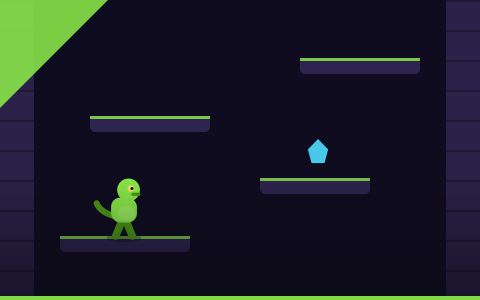
Monster Tower
An endless procedural tower. Every floor is generated, so memorising it is worthless.

Monster Cannon Challenge
Launch a small fire imp at towers of blocks. Angle and power, fifteen stages, no time pressure.