On this page
- Improvement is mostly not reaction speed
- Habit one: look where the information is
- Habit two: pre-commit your responses
- Habit three: protect the multiplier
- Habit four: recover deliberately
- Habit five: practise the specific thing
- Habit six: know which number you are actually scored on
- Habit seven: stop at the right time
- Track one number, not all of them
- The four failure types
- Rules worth deciding before you play
- A practice session that actually works
Improvement is mostly not reaction speed
The instinct is that arcade games are won by being fast, and that being fast is something you either are or are not. Both halves of that are mostly wrong.
Simple visual reaction time in adults sits somewhere around 200 to 300 milliseconds and is largely fixed. You are not going to train your way from 280 to 180. What you can change is everything wrapped around it, and that is where essentially all real improvement comes from:
- Where you look. Information that arrives 200 ms earlier is worth more than reacting 20 ms faster.
- Whether you have to decide. Reacting is fast; choosing which reaction is slow. Pre-commitment removes the slow part.
- What you protect. In combo games, the multiplier is the score.
- How you recover. After a mistake most players stay rattled for several seconds, which costs more than the mistake did.
Everything below is one of those four, applied.
Habit one: look where the information is
The most common mistake across every category is watching your own creature. Your creature is the one object on screen whose position you already know, because you are the one deciding it.
| Category | Where most players look | Where to look instead |
|---|---|---|
| Runner | At the creature | The far edge of the screen, where obstacles enter |
| Platformer | At the creature | One screen-width ahead of it |
| Battle | At the nearest enemy | At whichever enemy is winding up |
| Collection | At the item being collected | Where two streams will cross next |
| Reflex | At the creature | Where the cue will appear |
This one habit is worth more than any other single change, and it is free. It also feels wrong for the first few minutes, because peripheral vision is doing work you are not used to trusting.
Habit two: pre-commit your responses
There is a meaningful difference between simple reaction — 'press when something happens' — and choice reaction — 'press the right thing when something happens'. The decision stage typically costs another 100 to 150 milliseconds, and that gap is trainable.
The way to train it is to make the mapping automatic before the run starts. Decide, explicitly, that a violet floating obstacle means slide and an amber wide barrier means dash. Say it to yourself once. Then stop translating during the run and simply respond.
Shadow Beast is the cleanest place to practise this, because it is a four-direction choice-reaction test with the costume of a game. Players who stop thinking the word 'left' and simply move typically add ten to a streak within a single session.
Habit three: protect the multiplier
In every game with a combo, score is not a count of things collected — it is a count multiplied by a chain. That makes the chain, not the items, the thing to optimise.
Two practical rules follow:
- Skip anything that risks the chain. If reaching an item has a real chance of breaking your multiplier, skipping it is the higher-scoring play.
- Do not idle. Chains time out — two seconds in Monster Coin Rush, two and a half in most others. You can lose a ×4 chain by playing too safely.
At a high multiplier this becomes dominant. In Monster Coin Rush, where the cap is ×10, rebuilding a broken chain takes ten consecutive pickups — so at ×8 or above, the correct play is almost always the conservative one.
Habit four: recover deliberately
After a mistake, most players play worse for several seconds. They are rattled, they over-correct, and they frequently make a second mistake that had nothing to do with the first.
Two fixes, both slightly boring:
- Take the next two obstacles safely. Deliberately. No greed, no near misses, no chasing a pickup. Rebuild your rhythm first.
- Breathe out once. It sounds like nonsense and it works, because it occupies the part of your attention that would otherwise be replaying the mistake.
In Jungle Beast Run this is explicit advice: after a hit, spend ten seconds on the safe ground line before going high again. The fruit will still be there.
Habit five: practise the specific thing
Playing a lot is not the same as practising. Playing a lot means repeating what you already do, including the mistakes.
Deliberate practice in these games looks like this: pick one thing, play five runs attending only to that, then stop. Examples that work well:
- Five runs of Monster Dash tapping every jump, never holding. Your distance will drop and then exceed your previous best.
- Five rounds of Monster Arena where you only attack during an enemy's recovery window, never otherwise.
- Five runs of Monster Treasure Hunt where you skip every risk line entirely.
- Five runs of Monster Tunnel using only short taps, never a held input.
The point is that each of these isolates one variable. Improvement you can attribute is improvement you can repeat.
Habit six: know which number you are actually scored on
Games on this site record different metrics, and playing for the wrong one is a surprisingly common way to plateau.
| Metric | What it rewards | Examples |
|---|---|---|
| Distance | Consistency over many decisions | Monster Dash, Beast Run |
| Score | Chain protection and risk judgement | Monster Coin Rush, Crystal Monster Quest |
| Time | Pattern knowledge and patience | Monster Boss Escape, Falling Monster Frenzy |
| Wave / Round | Health management across a whole run | Monster Arena, Ultimate Monster Challenge |
| Streak | Unbroken accuracy | Shadow Beast, Monster Hunter Dash |
| Level | Completion rather than survival | Monster Castle, Gravity Monster |
If a game records waves, hoarding health early is worth more than killing quickly. If it records score, the multiplier matters more than the count. The metric is shown on every game page under 'Scoring metric' — it is worth a glance before your first run.
Habit seven: stop at the right time
Reaction performance degrades measurably with frustration, and it recovers quickly. The practical rule that helps most people: after three runs that end in the same place, stop for thirty seconds.
This is not a mindset lecture. Short runs restart instantly, which makes it very easy to take twenty attempts in a row while getting steadily worse — and because each one is cheap, nothing stops you. The instant restart is the genre's best feature and its one trap.
The corollary is that sessions should be short. Classification speed degrades faster than raw reaction does, so twenty minutes of attentive play beats an hour of tired play by a wide margin. Most personal bests on this site are set in the first ten minutes of a session.
Track one number, not all of them
A final habit that is more about attention than technique.
Pick one game and one metric, and pay attention to it across a week. Not all thirty games, and not every metric in the one you chose — one number.
The reason is that improvement in these games is real but small per session, and spreading your attention across the whole library makes it invisible. A best distance moving from 940 to 1,180 over five sessions is obvious if you are watching it and completely unnoticeable if you are not.
It also makes the technique advice above testable. Apply one habit — tapping jumps, watching the screen edge, protecting a chain — and watch a single number respond. That is the difference between believing advice and knowing it.
The four failure types
Almost every death in these games belongs to one of four categories, and each has a different fix. Diagnosing which one you are committing is more useful than practising more.
- Reaction failure. You saw it too late. The fix is where you look, not how fast you are — see the runner guidance about watching the incoming edge.
- Classification failure. You saw it in time and did the wrong thing. The fix is familiarity: this improves faster than anything else on the list and it improves purely through exposure.
- Execution failure. You knew what to do and did it imprecisely. The fix is deliberate practice of that one input, usually in an easier game.
- Decision failure. You chose badly — took a risk you did not need, chased an item at low health, pushed through a phase change. The fix is rules decided in advance, because you will not out-think this in the moment.
Most plateaued players assume they are hitting reaction failures and are actually hitting decision failures, which is good news: decisions are the cheapest of the four to improve, and the improvement is immediate rather than gradual.
Rules worth deciding before you play
Because decision failures happen under pressure, the only reliable fix is to have already decided. These four cost nothing and each is worth a measurable amount:
- On the last hit, take nothing optional. No risk lines, no bonus items, no aggressive positioning.
- After a phase change, watch one full cycle. Always, even when you think you know the boss.
- If three runs in a row end the same way, change something or stop. Repeating an approach that is not working is the most expensive habit in arcade games.
- Rebuild a broken chain immediately with easy pickups. Do not resume greedy play until the multiplier is back.
None of these require skill. All of them require having thought about it beforehand, which is the entire point — the moment when you need the rule is the moment when you are least able to invent it.
A practice session that actually works
Fifteen minutes, one game, four parts. This is the structure we would recommend to anyone who has plateaued and wants to move.
- Warm up (3 minutes). Play normally. Do not care about the score. You are waiting for classification speed to come up, and it takes about this long.
- Isolate (5 minutes). Pick one thing — chain protection, watching the incoming edge, dashing through rather than away — and do only that, even at the cost of the run. You are not trying to score.
- Integrate (5 minutes). Play normally again, with the isolated habit still deliberate. It will feel slightly awkward. That is what learning feels like from the inside.
- Measure (2 minutes). One or two serious attempts. Compare against your recent average rather than your all-time best, which is a number set on an unusually good day and a poor baseline.
The isolate phase is the part people skip and the part that does the work. Playing normally for fifteen minutes rehearses what you already do; five minutes of doing one thing badly on purpose is what changes it.
Key takeaways
- Raw reaction time is largely fixed; gaze position, pre-commitment, chain protection and recovery are all trainable.
- Look where information arrives, not at your own creature — worth more than any speed gain.
- In combo games the multiplier is the score, so skip anything that risks it and never idle.
- Practise one isolated thing for five runs rather than playing a lot; attributable improvement is repeatable.
- Stop for thirty seconds after three identical failures — frustration measurably degrades performance.
Frequently asked questions
Can I actually train my reaction time?
Raw reaction time barely moves. Everything around it — anticipation, gaze position, pre-committed responses, recovery — improves substantially and quickly.
How long should a practice session be?
Twenty minutes of attentive play beats an hour of tired play. Classification speed degrades faster than reaction does, and most personal bests are set early in a session.
Why does my score drop when I collect more?
Because you are breaking your chain to reach things. Score is value multiplied by the multiplier, so a smaller haul at a high chain wins.
Which game improves me fastest at the others?
Monster Dash for classification speed and Monster Arena for telegraph reading. Those two skills carry into almost everything else here.
How long does it take to see improvement?

Alex Morgan
Browser Games Editor & Interactive Gaming Content Specialist
Alex Morgan is the editorial byline for everything published on Monster Arcade — the design notes behind all 30 original games, the strategy guides, and the tuning decisions that set every difficulty curve on the site. More about our editorial byline.
Published · Last updated
Games mentioned in this guide

Monster Coin Rush
The fastest collection game here. A two-second combo window and coins arriving faster than you can think.
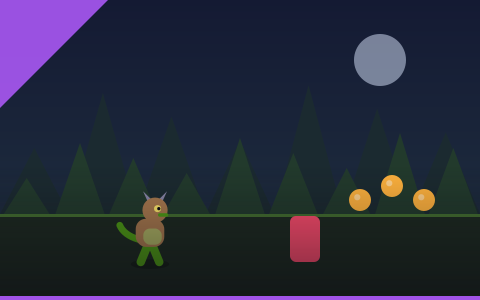
Monster Dash
Two actions, endless forest, instant restart. The best first game on the site.
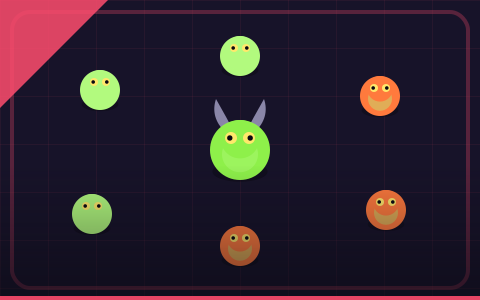
Monster Arena
Clear each round of creatures, then pick one of three permanent upgrades. Builds compound fast.

One-Tap Monster
One button, one rule: tap when the ring lines up. The purest timing game on the site.

Monster Treasure Hunt
Gather treasure in an overgrown clearing while creatures wander through. The clearest combo lesson here.