On this page
Plan an order, not a path
Most players try to memorise a map and fail, because a map is a lot of information and very little of it is actionable.
What matters is the order you visit places in, which is a much shorter list and the part you actually control. 'North vault, then east chamber, then the south wing, then out' is four items you can hold in your head, and it determines almost everything about how efficient a run is.
On a failed run, spend ten seconds recalling your order before restarting. Most players who plateau are collecting the right things in the wrong sequence and walking the same corridor four times.
Four routing rules that always apply
- Clear dead ends before the route that opens the exit. Once the exit is available, every step away from it is psychologically harder and usually genuinely riskier.
- Collect in passing, never as a trip. A dedicated journey for one item is almost always a losing trade, and it is the most common way a good run becomes a failed one.
- Between two equal branches, take the one nearer your escape route first. It preserves the option of leaving.
- Treat cleared ground as a lane. A corridor you have already been down is known and safe; use it to reposition rather than cutting through new space.
Bank earlier than feels right
In Monster Cave Quest and Underwater Monster Quest, what you are carrying is worth nothing until you reach a safe point.
The arithmetic is not close: leaving with eight treasures beats losing everything chasing the twelfth, because a failed run scores zero. And yet almost everybody overreaches, because the twelfth treasure is visible and the risk is abstract.
A concrete rule that helps: decide your bank-out threshold before you start. 'I leave at forty per cent lantern' is a decision you can make calmly; 'I'll see how it goes' is a decision you will make badly under pressure.
Judging whether the greedy detour is affordable
Every adventure game here has a high-value area placed far from safety — the greed pocket in Monster Cave Quest, the deep shelf in Underwater Monster Quest.
The judgement is always the same shape: can I get there, collect, and get back with margin? Not 'can I get there', which is the question people actually ask.
Two practical heuristics:
- In Monster Cave Quest, the greed pocket is only worth it with more than half your lantern remaining.
- In Underwater Monster Quest, plan a deep dive as a single continuous route before you start descending. Browsing at depth is how runs end.
Handling creatures without fighting them
You cannot fight anything in this category, which makes creature handling a positioning problem.
Patrolling creatures are safest to pass just after they turn away from you, which gives you the longest window before they turn back. Drifting creatures on sine paths are entirely predictable once you have watched one full cycle — spending three seconds watching is usually cheaper than a collision.
In Monster Escape the rule is different and specific: Wisp Hounds see you down straight corridors and lose interest when you turn a corner. Corners are safety and corridors are risk, which means the correct route is frequently the one with more turns rather than the shortest.
The three-run learning curve
Adventure games reward a specific pattern of play that is worth doing on purpose.
Run one: explore, expect to fail. Do not optimise. Learn where things are and which routes connect.
Run two: build a route. Now you know the map, decide an order and follow it even where it feels inefficient. You are testing the plan, not the map.
Run three: execute and bank. This is the run that scores, and it usually scores several times what run one did.
Most players attempt run three on their first try and are disappointed. The first two are not wasted attempts; they are the part of the game that the category exists for.
Budgeting a meter
Adventure runs are won with arithmetic, and the arithmetic is simple enough to do while playing.
Split the meter in three. The first third is for going outward. The second is for collecting once you are there. The last third is reserved for the return, and it is not available for anything else regardless of what you can see.
The reason for thirds rather than halves is that the return is rarely as efficient as the outward trip — you will meet creatures you avoided, take a wrong turn, or need to route around something that has moved. A reserve that exactly matches the outward cost is a reserve that runs out fifteen metres from an exit.
Refills change the budget rather than suspending it. Picking one up means recalculating from where you now stand, not treating the meter as full again — because your distance from an exit has grown while the meter was draining.
Creatures are obstacles, not targets
Adventure games generally let you deal with creatures and almost never reward it.
Nothing you defeat refills the meter, and the time spent fighting is time the meter spent draining. A creature that can be walked around has cost you nothing; the same creature fought has cost you several seconds of your return budget.
So the default is avoidance, and the exception is a creature genuinely blocking the only route. Players arriving from the battle games frequently clear rooms out of habit and wonder why their runs end early with plenty of map left — the answer is that they spent their lantern on something the game was not asking for.
Key takeaways
- Plan an order of destinations, not a path — order is the part you control and the part you can remember.
- Clear dead ends first, collect in passing, and keep your escape route open.
- Decide a bank-out threshold before you start rather than under pressure.
- The greedy detour question is 'can I get back with margin', not 'can I get there'.
- Pass patrolling creatures just after they turn away, and use corners to break line of sight.
Frequently asked questions
Should I always try for every collectible?
No. The highest-value items are placed furthest from safety on purpose, and a failed run scores zero regardless of what you were carrying.
How do I learn a map faster?
Memorise the order you visit places in rather than the layout. It is far less information and it is the part that determines efficiency.
What is the best way to handle patrolling creatures?
Pass just after they turn away from you, which gives the longest window. For line-of-sight hunters, turn a corner.
How do I know when to turn back?
Do refills reset my budget?

Alex Morgan
Browser Games Editor & Interactive Gaming Content Specialist
Alex Morgan is the editorial byline for everything published on Monster Arcade — the design notes behind all 30 original games, the strategy guides, and the tuning decisions that set every difficulty curve on the site. More about our editorial byline.
Published · Last updated
Games mentioned in this guide

Monster Cave Quest
Explore a branching cave for twelve treasures, then find the way out before your lantern dies.

Underwater Monster Quest
Dive a sunken reef for pearls with a breath meter that makes every detour a real cost.
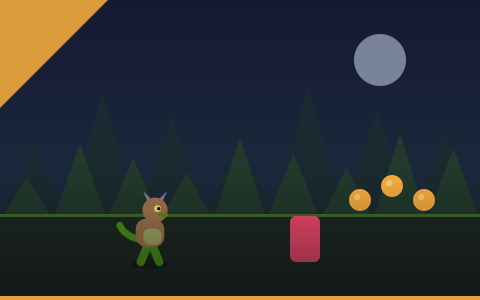
Monster Escape
Find four keys in a shifting forest maze and reach the gate before the Wisp Hounds close in.
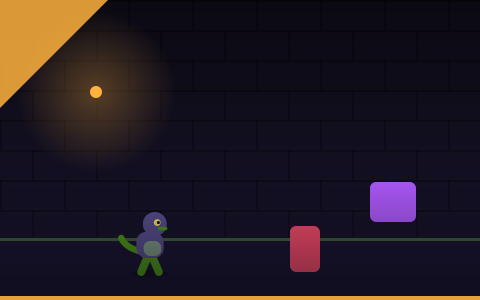
Pixel Monster Adventure
A retro-styled dungeon crawl: three keys, four wings, and a guardian that only wakes at the end.