On this page
- Four components, one of which is fixed
- Shorten identification with vocabulary
- Remove selection with pre-commitment
- Improve execution with hand position
- A practice routine
- What actually improves, and what does not
- Do not practise when frustrated
- Measuring rather than guessing
- Posture, screen distance and input device
Four components, one of which is fixed
What people call 'reaction time' is really four things stacked, and only the first is resistant to practice:
- Detection. The cue reaching your visual system. Roughly fixed at around 200-250 ms for a simple cue.
- Identification. Working out what the cue means. Highly trainable — this is pattern recognition.
- Selection. Choosing a response. Highly trainable, and removable entirely with pre-commitment.
- Execution. Physically moving. Trainable in small ways — hand position, resting rather than hovering.
Three of the four are yours to change, and together they usually account for more of a slow response than detection does.
Shorten identification with vocabulary
Identification is fast when you recognise something and slow when you have to reason about it. The fix is building a small, fixed vocabulary and drilling it until recognition is automatic.
In this library the vocabulary is genuinely small: three obstacle classes, six spawn patterns, seven boss telegraphs, seven creature behaviours. That is about twenty things total, and knowing all twenty makes almost every situation in thirty games immediately classifiable.
Practise it by naming things out loud as they appear. It feels silly and it forces the identification to be conscious until it no longer needs to be.
Remove selection with pre-commitment
Choice reaction costs 100-150 milliseconds more than simple reaction, and that cost is entirely in deciding.
Before a run, state your responses explicitly. Violet means slide. Amber means dash. Blue ring means stop attacking. Slam means move in. Once those are decided, a cue does not require a decision — it triggers a response.
Shadow Beast is built to train exactly this, and it includes feints — about one cue in eight shifts sides after 120 milliseconds — specifically so that guessing is not a viable shortcut.
Improve execution with hand position
The smallest component and the easiest to fix.
- Rest fingers on the keys or screen buttons rather than hovering above them.
- Keep both hands on the controls in three-button games.
- Sit up — slouching worsens head position for peripheral vision.
- On a phone, play in landscape and use fullscreen.
None of these are dramatic individually and together they are worth a meaningful fraction of a response.
A practice routine
- Five runs of Shadow Beast focusing only on not pre-guessing. Watch the average answer time on the game-over screen.
- Five runs of Endless Monster Run naming each obstacle class out loud as it appears.
- Five runs of One-Tap Monster aiming for ordinary hits rather than perfects.
- Stop. Fifteen runs is about eight minutes and is more than enough. Reaction performance degrades with fatigue faster than almost anything else.
Shadow Beast reports your average answer time, which makes it the only honest measurement on the site. Use it as a baseline rather than as a score.
What actually improves, and what does not
A distinction that saves a lot of wasted effort: raw reaction time barely improves with practice. What improves is everything either side of it.
Before: where you are looking. A player watching the correct part of the screen responds to an event tens of milliseconds sooner than one whose eyes are on their own creature, and that gap dwarfs anything training raw speed would buy.
During: classification. Deciding which response an event needs is slower than reacting at all, and it gets dramatically faster with familiarity. This is the single largest source of improvement available to most players.
After: execution. Knowing what to do and doing it cleanly are different skills, and the second one is pure practice.
So if your reactions feel slow, the useful question is almost never 'how do I react faster' — it is 'was I looking in the right place, and did I know what I was looking at'.
Do not practise when frustrated
The most important item and the one most often ignored.
Reaction and classification both degrade measurably with frustration, and they recover within a minute or two. That means the twentieth consecutive attempt after a run of failures is not only unpleasant, it is genuinely worse — you are practising a degraded version of the skill and reinforcing it.
Three runs ending the same way is the signal. Stop, do something else briefly, come back. Players who adopt this rule usually find their next attempt is close to their best, which is a strong hint about what the previous seventeen were actually measuring.
Measuring rather than guessing
Most self-assessment in this area is wrong, because the feeling of being slow is produced by frustration rather than by measurement.
Shadow Beast reports your average answer time on the game-over screen, which makes it the one place on the site where you can see the number rather than estimate it. Playing it at the start of a few sessions gives you a baseline worth having.
What the baseline is for is distinguishing a bad session from a real decline. If your average is where it usually is and the runs are still ending early, the problem is decisions or classification rather than speed — and those have completely different fixes.
It is also worth noting how much the figure moves with fatigue, posture and how tense your hand is. Seeing that variation directly is more convincing than being told about it, and it tends to change how people schedule their sessions.
Posture, screen distance and input device
Three physical factors move measured reaction times more than most people expect.
Screen distance. Sitting too far away means peripheral events arrive at the edge of useful vision. Closer is better up to the point where you cannot see the whole stage without moving your eyes.
Posture. Hands resting on the desk rather than held in the air produces more consistent input, and consistency is what these games measure.
Input device. A keyboard registers faster than a touchscreen, and a touchscreen registers faster than a trackpad used for the same purpose. None of that is a reason to change device; it is a reason not to compare figures across them.
Key takeaways
- Detection is roughly fixed; identification, selection and execution are all trainable.
- The whole library's vocabulary is about twenty things — learn them and identification becomes automatic.
- Pre-committing responses removes the selection stage, worth 100-150 milliseconds.
- Rest your fingers on the controls, sit up, and keep sessions to about eight minutes.
- Never practise while frustrated — you are reinforcing a degraded version of the skill.
Frequently asked questions
Can I actually get faster?
Meaningfully, yes — but by shortening identification and selection rather than detection. Raw detection barely moves.
How do I measure my progress?
Shadow Beast reports your average answer time on the game-over screen, which is the only honest measurement here.
How long should a reaction practice session be?
About eight minutes. Reaction performance degrades with fatigue faster than almost any other skill.
Can I actually measure my reaction time here?
Does being tired really make that much difference?

Alex Morgan
Browser Games Editor & Interactive Gaming Content Specialist
Alex Morgan is the editorial byline for everything published on Monster Arcade — the design notes behind all 30 original games, the strategy guides, and the tuning decisions that set every difficulty curve on the site. More about our editorial byline.
Published · Last updated
Games mentioned in this guide
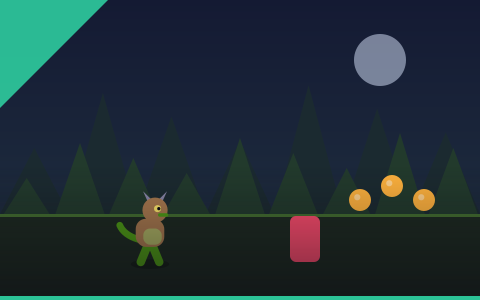
Shadow Beast
A cue appears, you answer it. Effectively a reaction-time test wearing a monster costume.

One-Tap Monster
One button, one rule: tap when the ring lines up. The purest timing game on the site.
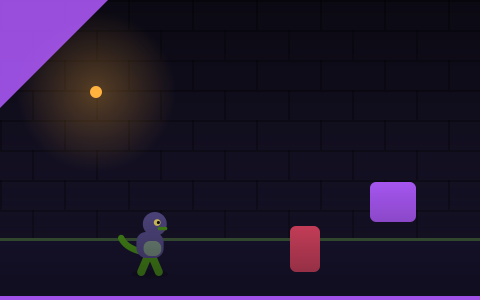
Endless Monster Run
Fully procedural, no templates, no repeats. The purest reaction test in the library.
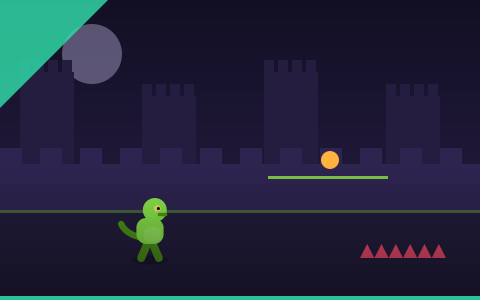
Falling Monster Frenzy
Dodge what falls, catch what glows. Two inputs and an increasingly crowded ceiling.