On this page
You are probably not slow
Simple visual reaction time in adults sits around 200 to 300 milliseconds, and it does not move much with practice. If you are losing runs, the cause is almost certainly not that your hands are slow.
What varies enormously between players — and what genuinely improves — is everything wrapped around the reaction: when the information arrives, whether a decision is required, and how quickly you recover from being wrong. All three are trainable, and all three are worth more than the raw number.
Move the information earlier
The cheapest improvement available to anyone: stop watching your own creature.
Your creature's position is the one thing on screen you already know, because you are deciding it. Every frame spent looking at it is a frame not spent on the thing that will kill you.
Watch where new information enters instead — the right edge in a runner, the ground shadows in a boss fight, the enemy that is winding up in an arena, where two streams will cross in a collection game. Information that arrives 200 milliseconds earlier is worth far more than reacting 20 milliseconds faster.
Remove the decision
There is a real gap between simple reaction — press when something happens — and choice reaction — press the correct thing. The decision stage typically costs another 100 to 150 milliseconds.
That stage is removable. Before a run, explicitly decide your response to each cue type: violet means slide, amber means dash, a crouching gorer means step sideways. Say it once. Then stop translating and simply respond.
Shadow Beast is built to train exactly this. It is a four-direction choice-reaction test, and the players who improve are the ones who stop thinking the word 'left' and simply move.
Physical details that actually matter
- Rest your finger on the input. Hovering above a key or a screen button adds travel time to every single response.
- Keep both hands on the controls. Obvious, frequently ignored, and worth a surprising amount in three-button games.
- Sit up. Slouching genuinely slows response, mostly by making your head position worse for peripheral vision.
- Turn sound on. For most people an audio cue arrives slightly faster than a visual one, and every timing-critical event in the library has one.
- Play in landscape on a phone and use fullscreen. More visible play area means earlier information.
Recovery is the underrated half
After a mistake, most players perform worse for several seconds. They over-correct, they replay the error, and they frequently make a second mistake unrelated to the first.
Two fixes, both slightly boring and both effective: take the next two obstacles deliberately safely, and breathe out once. The second sounds like nonsense and works because it occupies the attention that would otherwise be spent on the mistake.
The bigger version of the same point: after three runs that end in the same place, stop for thirty seconds. Reaction performance degrades measurably with frustration and recovers quickly, which means attempt twenty is usually worse than attempt five.
Warm up, and know your baseline
Your first run of a session is almost never your best, and treating it as practice removes the frustration of a poor start.
Two or three low-stakes runs before you start caring about the number is worth more than any technique on this page. Reaction and classification both need a minute or two to come up to speed, and starting a serious attempt cold is how a session begins badly and stays that way.
It also helps to know roughly what your baseline is. Shadow Beast reports your average answer time on the game-over screen — the only honest measurement on the site. Knowing your usual figure means you can tell a bad session from a bad habit.
Three things that are not reaction time
Players describing themselves as slow are usually describing one of three other problems, each with a different and more tractable fix.
Attention placement. Watching your own creature rather than the incoming edge of the screen costs you more warning than any difference in reflexes between two people. This is the cheapest fix available and most players have not made it.
Classification. Deciding which response an obstacle needs takes longer than reacting at all, and it shortens dramatically with familiarity. A player who has seen a hazard fifty times responds to its silhouette; one who has seen it twice is still working it out.
Decision load. Tracking a chain, a meter and a cooldown while also avoiding things spends attention that would otherwise be available. Deliberately ignoring the scoring layer for a few runs frequently produces a longer run than trying harder does.
Position, then read
A habit that buys time without making you any faster: put yourself somewhere that shortens every future response before you need one.
In a lane runner, the centre lane is worth holding when nothing forces you out of it, because it is one step from both edges while an edge lane is two steps from the other side. In an arena, standing near the middle means every escape direction is available. In a platformer, staying on the ground rather than in the air means your next input takes effect immediately.
None of that is reaction speed and all of it produces the same result: less to do when something arrives. Players who feel fast are usually players who were already in a position that made the response short.
Key takeaways
- Raw reaction time is largely fixed; gaze position, decision removal and recovery are not.
- Watch where information enters, never your own creature.
- Pre-commit a response to each cue type before the run so reacting costs no decision time.
- Rest your finger on the input, sit up, and play with sound on.
- Stop for thirty seconds after three identical failures.
Frequently asked questions
Can I train my reaction time with these games?
You can train everything around it substantially. Raw simple reaction barely moves, but anticipation, gaze position and choice reaction all improve quickly.
Does sound really help?
For most people audio cues arrive slightly faster than visual ones, and every timing-critical event here has one. It is free and it is worth turning on.
Which game is the best reaction test?
Shadow Beast for choice reaction and Endless Monster Run for classification speed under pressure.
Will practising reaction time make me faster?
Where exactly should I be looking?
Does the game ever give me less warning than it should?

Alex Morgan
Browser Games Editor & Interactive Gaming Content Specialist
Alex Morgan is the editorial byline for everything published on Monster Arcade — the design notes behind all 30 original games, the strategy guides, and the tuning decisions that set every difficulty curve on the site. More about our editorial byline.
Published · Last updated
Games mentioned in this guide
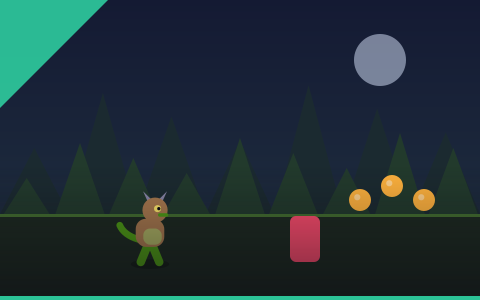
Shadow Beast
A cue appears, you answer it. Effectively a reaction-time test wearing a monster costume.
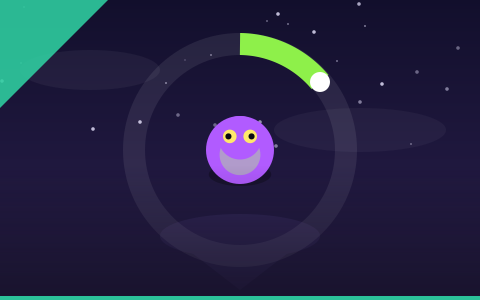
One-Tap Monster
One button, one rule: tap when the ring lines up. The purest timing game on the site.
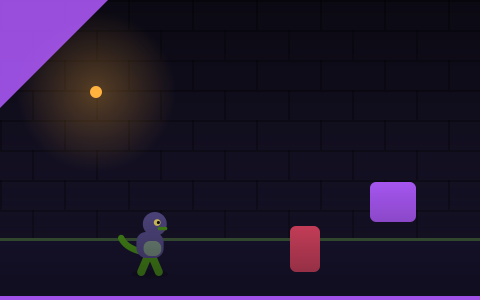
Endless Monster Run
Fully procedural, no templates, no repeats. The purest reaction test in the library.

Monster Hunter Dash
Dash between creatures on a timer. Timing and target choice at once — the hardest reflex game here.