On this page
- A note on what this guide is and is not
- Why creatures, from the beginning
- Constraints that produced good design
- Constraints that were genuinely bad
- What the browser changed
- What has not changed at all
- Where this goes next
- What we would tell someone starting now
- Why monsters suit arcade design
- What has actually changed
- Where the genre appears to be going
A note on what this guide is and is not
This is a design history rather than a factual chronology of the games industry. We are a small studio that builds browser arcade games; we are not historians, and we are not going to cite dates and sales figures we cannot verify.
What we can talk about with some authority is the design lineage — why certain patterns keep reappearing, which of them were forced by hardware and which turned out to be good ideas independent of it. Everything below is about mechanics we have implemented ourselves and can therefore speak about honestly.
Why creatures, from the beginning
Arcade games have used creatures as antagonists for as long as arcade games have existed, and the reason is less about theme than it looks.
A creature solves three problems at once on a display with very little resolution to spare:
- It is readable at a tiny size. Eyes and a silhouette communicate 'this is alive and it is coming for you' in a handful of pixels.
- It can telegraph. A shape can flash; a creature can crouch, rear back or open its mouth, and a player understands all three without being taught.
- It justifies inconsistency. A world containing monsters can plausibly contain almost anything, which means variety without the design feeling incoherent.
That third point is why our own library can hold a volcano lizard, a reef predator, a scrap-metal hulk and a shadow wisp without anything looking out of place. It is not an aesthetic accident; it is the practical benefit that made monsters the default antagonist long before we started.
Constraints that produced good design
Early arcade hardware imposed limits that turned out, in several cases, to be excellent design decisions in disguise. These are the ones we deliberately kept:
| Old constraint | Why it existed | Why we kept it |
|---|---|---|
| Short runs | Cabinet throughput — more players per hour | Keeps the lesson and the next attempt close together |
| No saved progress | No storage | Removes the fear of losing something, which frees players to experiment |
| A single number as reward | Nothing else to store | An honest measurement that cannot be inflated by grinding |
| Instant restart | Insert another coin | The cheapest possible cost of failure |
| Escalating difficulty | End the run so the cabinet turns over | Guarantees the game eventually asks more than you can give |
| Loud readable art | Attracting attention across a noisy room | Legibility at speed is still the hardest visual problem |
Notice that only one of these — escalating difficulty to end a run — was originally adversarial toward the player. The rest were neutral technical limits that happen to produce a very good loop.
Constraints that were genuinely bad
It would be dishonest to present every old limitation as secretly wise. Several were simply bad and we are glad they are gone:
- Difficulty tuned to extract money rather than to be interesting. A difficulty spike designed to end a run at a specific point is not a design decision, it is a business one.
- Unreadable deaths. Hardware limits meant hazards frequently were not distinguishable from scenery, and 'learn it by dying' was normal.
- No accessibility consideration at all. A fixed cabinet with fixed controls at a fixed height served exactly one kind of body.
- Score as the only feedback. A number going up tells you nothing about what you did wrong.
Our game-over screens exist specifically because of that last point. Every one of them says something specific — which action the obstacle needed, which habit caused the loss — because 'you died' is not feedback.
What the browser changed
Moving into a browser tab changed four things materially, and all four shape how this site is built.
Distribution became free
No cabinet, no download, no store. The cost of trying a game fell to one click, which means the first five seconds matter more than they ever have. A game that takes ten seconds to load has already lost a meaningful share of its audience.
The input device stopped being fixed
A cabinet had one control scheme. A browser game has keyboard, mouse, touch, and an unknown screen size, and it has to be good on all of them simultaneously. This is genuinely harder than it sounds and it is why touch layouts here are declared per-game rather than applied generically.
Storage arrived, quietly
localStorage means a browser game can remember your best score without an account. That is a real improvement on the cabinet — and it is worth noting what it does not enable: without a server there is still no verifiable leaderboard, which is why this site has none.
The session got shorter and more interrupted
Arcade play was a deliberate trip. Browser play happens in a gap between other things, on a device that rings. Automatic pause on tab change is not a nicety; it is the modern equivalent of not losing your game when someone walks past the cabinet.
What has not changed at all
Strip away four decades of hardware and the loop is identical. Attempt, fail, understand, attempt again, with each cycle short enough that understanding arrives while the last attempt is fresh.
The things that make that loop work are also unchanged:
- Failure must be cheap, or players stop after four attempts.
- Failure must be legible, or there is nothing to learn.
- Difficulty must arrive gradually, or a player never sees a pattern.
- Threats must be readable at speed, which is still a harder visual problem than making them look good.
We rediscovered every one of these while building thirty games, mostly by getting them wrong first. That is the strongest argument we know that they are properties of the format rather than fashions.
Where this goes next
Honestly? We do not know, and we are suspicious of confident predictions about it.
What we can say is what we are working on, which is less about new mechanics than about the same mechanics being available to more people. The largest genuine gap in this library is that a fast action game is close to unplayable without sight, and partially unplayable with limited fine motor control. Reduced-motion support and full keyboard navigation of everything outside the canvas are a start and are not a solution.
The second thing is scale without dilution. The architecture here is built to hold hundreds of games rather than thirty — adding one means adding a record, a game file and a thumbnail. The interesting question is whether a library can grow that far while every game in it stays something a person deliberately made, and we do not intend to find out by lowering the bar.
What we would tell someone starting now
Build the smallest complete thing, then make it fair before you make it big.
Thirty games sounds like the hard part and it was not. The hard part was the first one being genuinely fair — telegraphs that read, spacing that never traps, feedback that explains a failure. Once that existed, the other twenty-nine were variations on a solved problem.
Why monsters suit arcade design
The pairing is old enough to look inevitable, and it is worth unpicking why it works rather than treating it as tradition.
A creature communicates its behaviour through its shape. Something low and wide reads as slow and heavy before it has moved; something small with thin limbs reads as fast. A player can therefore predict an enemy they have never seen, which is exactly the property an arcade game needs from its cast — there is no time for a tutorial mid-run.
Creatures also justify variety without justifying complexity. Six different creatures with six movement patterns needs no explanation at all, where six abstract shapes behaving differently would feel arbitrary. The fiction is doing real design work.
And they scale visually in a way that maps onto difficulty. A larger creature reading as more dangerous is a free communication channel that costs no HUD space and no words.
What has actually changed
The mechanics of the genre have moved less than people assume. What has changed is everything around them.
- Failure got cheaper. A restart used to cost money and now costs a second, which changes how hard a game is allowed to be.
- Input got more varied. Designing for a keyboard, a touchscreen and a gamepad simultaneously is a constraint the cabinet era never had.
- Distribution got instant. A game that takes ten seconds to start loses most of its audience, which is a design pressure as real as any mechanic.
- Sessions got shorter and more frequent. Three minutes several times a day rather than twenty minutes once.
The core loop — escalating challenge, clean failure, immediate restart, a number to beat — has survived all of it essentially unchanged, which is a reasonable argument that it was well designed in the first place.
Where the genre appears to be going
Predictions are cheap, so here are three trends we can actually observe rather than three guesses.
Back toward short sessions. After a decade of free-to-play games designed to occupy hours, a good deal of browser development is returning to the three-minute run — which is what the format was always best at.
Procedural content as a default. Generation has become cheap enough and well-understood enough that even small projects use it, with the associated risk that unconstrained generators produce a great deal of uninteresting content.
Accessibility treated as design rather than as an option screen. The better recent games build in readability, forgiveness and input flexibility from the start instead of adding toggles afterwards, and the result is usually a better game for everybody.
None of that is revolutionary, and the genre's core has survived forty years of much larger changes. A run, an escalation, a failure you understand, and a number to beat is a durable structure — probably because it is about learning rather than about technology.
Key takeaways
- Creatures became the default arcade antagonist because they are readable at tiny sizes, can telegraph, and justify visual variety.
- Short runs, no saved progress, instant restart and a single score were technical limits that turned out to be excellent design.
- Difficulty tuned to end runs for commercial reasons, and unreadable deaths, were genuinely bad and are worth leaving behind.
- The browser made distribution free, input unpredictable, storage local and sessions interruptible.
- The core loop — cheap failure, legible failure, gradual difficulty — has not changed at all.
Frequently asked questions
Are these games based on any classic arcade titles?
No. Every game, creature and mechanic here is original. This guide discusses design patterns common to the format, not specific titles, and we use no characters, artwork or trademarks from any existing property.
Why do modern browser arcade games still have short runs?
Because the short run is what makes the learning loop work, not because of any hardware limit. Understanding arrives between runs, and a long run puts the lesson and the next attempt too far apart.
Is the lack of a leaderboard a technical limitation?
It is a consequence of being a static site with no server. We could add one, but a score we cannot verify is not worth ranking, so we show your own local best instead.
What is the biggest unsolved problem in this genre?
Accessibility. A fast action game remains close to unplayable without sight and partially unplayable with limited fine motor control. We would rather name that gap than imply it does not exist.
Why do arcade games still use the same basic structure?
Did arcade games get easier over time?
Are any of these games based on existing monster franchises?

Alex Morgan
Browser Games Editor & Interactive Gaming Content Specialist
Alex Morgan is the editorial byline for everything published on Monster Arcade — the design notes behind all 30 original games, the strategy guides, and the tuning decisions that set every difficulty curve on the site. More about our editorial byline.
Published · Last updated
Games mentioned in this guide
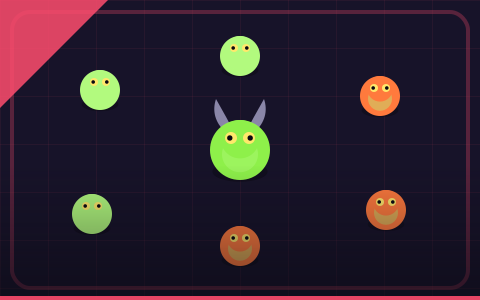
Monster Arena
Clear each round of creatures, then pick one of three permanent upgrades. Builds compound fast.
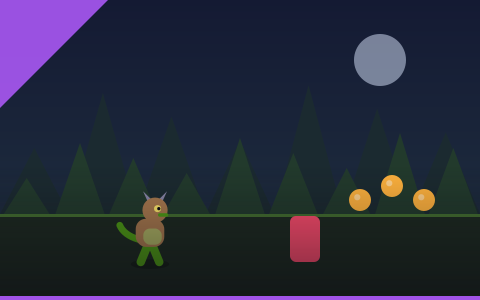
Monster Dash
Two actions, endless forest, instant restart. The best first game on the site.
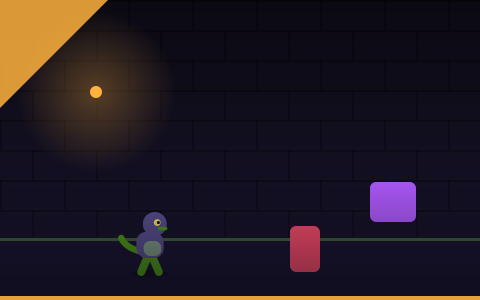
Pixel Monster Adventure
A retro-styled dungeon crawl: three keys, four wings, and a guardian that only wakes at the end.

Monster Arcade Ultimate
The flagship. Three stages in one run — a runner, a collection stage and a boss fight.