On this page
A working definition
A monster arcade game is a short, score-driven game featuring original creatures, built around repeated attempts rather than sustained progress. A run lasts somewhere between thirty seconds and ten minutes. Failing restarts you almost immediately. Your progress is measured by a number — a score, a distance, a survival time, a wave reached — rather than by unlocks, saves or a story that advances.
That definition is deliberately mechanical rather than thematic. The monsters matter enormously to how a game feels, but they are not what makes it an arcade game. What makes it an arcade game is the loop: attempt, fail, understand, attempt again, with each cycle short enough that understanding arrives while the last attempt is still fresh in your head.
Three structural properties follow from that loop, and almost every design decision on this site follows from those three:
- Failure has to be cheap. If restarting takes ten seconds, you will stop after four attempts. If it takes one second, you will take twenty. Every game here restarts on a single key press.
- Failure has to be legible. You must be able to name what went wrong. This is why every game-over screen on this site says something specific rather than 'try again'.
- Difficulty has to arrive gradually. A game that is hard at second one teaches you nothing, because you never get far enough to see a pattern.
What separates an arcade game from everything else
No saved progress
There is nothing to lose by stopping and nothing to protect by continuing. That changes how you play: since a run has no external value, you are free to experiment with it. Players in longer games hoard resources and avoid risk because progress is expensive; players in arcade games take the greedy line because the cost of being wrong is fifteen seconds.
The score is the whole reward
In most games a number is a proxy for something else — experience toward a level, currency toward an item. In an arcade game the number is the thing itself. That sounds thin and is actually liberating: a score cannot be inflated by grinding, so it is an honest measurement of how well you played on that attempt.
Skill transfers, knowledge does not
You cannot memorise your way through a procedurally generated runner. What improves instead is recognition speed, gaze position, and the habit of committing early. Those improvements are real and they carry between games, which is why a player who gets good at one game on this site usually improves at the others without playing them.
A useful test: if a game would be meaningfully easier the second time because you remember the layout, it is not an arcade game — it is a level-based game wearing arcade clothes. Both are fine; they simply reward different things.
The six forms monster arcade games take
Monster games split into six shapes, and the split is by what the game asks of you rather than by theme. A jungle appears in three of these categories; what separates them is the question the game is asking.
| Form | The core question | Typical run | Example |
|---|---|---|---|
| Platformer | Can I place this jump accurately? | 1-8 min | Monster Castle |
| Adventure | Which route is worth the detour? | 3-10 min | Monster Cave Quest |
| Battle | What is this creature about to do? | 2-10 min | Monster Arena |
| Collection | Is that pickup worth the risk? | 1-5 min | Monster Treasure Hunt |
| Runner | Jump, duck or move — and how fast? | 1-4 min | Monster Dash |
| Reflex | Now. Exactly now. | 15 s - 3 min | One-Tap Monster |
The categories are not arbitrary. Each one trains a measurably different thing, and players tend to be noticeably better at one or two of them than the rest. That is worth knowing about yourself: the category you are worst at is the one with the most left to teach you.
Why monsters, specifically
Monsters solve a design problem that is genuinely hard in abstract arcade games: making a threat readable at a glance.
A creature has a face, a posture and a silhouette. When it is about to attack it can crouch, rear back or open its mouth, and a player understands all three instantly without being told. An abstract shape has to signal the same information with colour changes and outlines, which works but has to be learned. Every telegraph in this library — the crouch before a charge, the glow before a projectile — reads faster because it is attached to something that looks alive.
The second reason is variety without inconsistency. A monster world can plausibly contain a lava lizard, a reef predator, a scrap-metal hulk and a shadow wisp, which means nine environments and thirty games can share one visual language without anything feeling out of place.
The third reason is tone. Monsters let a game be threatening without being grim. Everything on this site is stylised rather than realistic — defeated creatures burst into coloured particles, and there is no blood anywhere — which keeps the games suitable for a general audience while still making a charging brute feel dangerous.
What a good monster arcade game does
Having built thirty of them, the list of things that actually matter turns out to be short and mostly unglamorous:
- It is playable within one second of the page loading. Every additional second of loading costs a meaningful share of players, and a game you never start teaches you nothing.
- It never kills you without warning. Every hazard telegraphs. If a hit felt unavoidable, either the tell was too short or it was in a place you had no reason to be looking — both are bugs.
- It gets harder on a curve, not a line. A linear ramp eventually reaches a speed no human can react to. A curve that approaches a ceiling stays hard forever without becoming impossible.
- It tells you why you lost. 'You died' is not feedback. 'That one needed a slide' is.
- It works the same on a phone. Not a cut-down version — the same game, with controls designed for a thumb rather than adapted for one.
- It respects a reduced-motion preference. Parallax and particles are decoration, and decoration should never be the reason somebody cannot play.
Notice that almost none of these are about difficulty. Difficulty is easy; fairness is the hard part, and fairness is what makes a player take a twentieth attempt.
Arcade rules, browser conveniences
The arcade heritage is real but it is not total, and the places where these games deliberately break with it are as interesting as the places where they keep faith.
What we kept is the shape of a session. A run starts from nothing, escalates, and ends for a reason you can name. There is no save file, no progress that carries forward, and no way to buy your way past a difficult section. What you bring to a run is what you have learned, which is the only currency an arcade game ever really accepted.
What we dropped is everything that existed because the machine needed money. There are no lives, no continues, no timers counting down toward a coin slot, and no difficulty spike engineered to end a session at a profitable moment. Those were commercial mechanisms wearing game-design clothes, and removing them costs nothing.
The replacement for a coin is simply the restart button, and it is deliberately the easiest thing on the page to reach. A run that ends should be followed by another run within about a second, because the gap between attempts is where the desire to make one goes to die.
How a run is structured
Almost every game here follows the same three-part shape, and recognising it makes any new game on the site immediately legible.
- The opening (roughly the first twenty seconds). Difficulty is low and the game is showing you its vocabulary — which hazards exist, which creatures appear, what the scoring rewards. Very few runs end here, and the ones that do end through inattention rather than difficulty.
- The middle (twenty seconds to about two minutes). Escalation. New elements stop being introduced and start combining, and the game begins asking you to do two things at once. This is where most runs end and where most improvement happens.
- The tail (beyond two minutes). Difficulty approaches its ceiling and stops climbing meaningfully. Runs here are decided by concentration rather than by skill, and they end when attention lapses.
The practical value of knowing this shape is that it tells you what a failure means. Dying in the opening is a mistake. Dying in the middle is the game working correctly. Dying in the tail is fatigue, and it is the signal that the session, not just the run, is finished.
It also explains why difficulty curves here are asymptotic rather than linear. A linear curve has no tail — it simply becomes impossible at a predictable moment, and every run ends at roughly the same place regardless of skill. A curve that approaches a ceiling leaves room above it for a better player to keep going, which is what makes a personal best a meaningful number rather than a measure of patience.
Common misconceptions
Three things people expect from a free monster game site that are not true here, worth stating so nobody wastes time looking for them.
There is no progression between games. Playing one game does not unlock, upgrade or affect any other. Each is complete and independent from the moment you open it.
There is nothing to collect across sessions. Coins and gems are scoring objects inside a run. They do not accumulate, they buy nothing, and there is no shop anywhere on the site.
There is no competition against other people. No leaderboard, no ranking, no player count. The only score you are measured against is your own previous one, stored in your browser.
Each of those absences is a deliberate choice rather than an unfinished feature, and the reasoning is the same in all three cases: a static site cannot verify anything, and an unverifiable number presented as a fact is a lie regardless of how common it is elsewhere.
How to get started
If you have never played one, start with a two-action runner — Monster Dash is the canonical example. Two verbs, instant restart, and honest feedback about which one you needed. Within ten attempts you will have an intuition for the whole genre.
From there, pick the category that sounds least like what you just played. If the runner felt good, try a battle game, which asks you to watch something else rather than yourself. If the runner felt stressful, try an adventure game, which gives you as long as you like to think.
And expect to be bad for a while. The measurable thing about arcade games is that almost everybody improves substantially in their first hour and then slowly for a very long time afterwards. The first hour is the fun part.
Key takeaways
- A monster arcade game is defined by a short attempt-fail-retry loop, not by its theme.
- Cheap failure, legible failure and a gradual difficulty curve are the three properties everything else follows from.
- The genre splits into six forms by what the game asks of you: timing, routing, pattern reading, risk judgement, speed and reaction.
- Monsters exist partly for tone and mostly because a creature can telegraph an attack in a way an abstract shape cannot.
- Fairness matters more than difficulty — it is what makes a player take a twentieth attempt.
Frequently asked questions
Are monster arcade games the same as endless runners?
No — endless runners are one of six forms. A runner is an arcade game, but so is a wave-based battle game, a timed collection game and a one-tap reflex game. What they share is the short attempt loop, not the scrolling.
Do I need to be good at games to enjoy these?
No, and the short run length is why. A failed attempt costs you seconds rather than progress, so being bad at a monster arcade game is cheap in a way that being bad at a long game is not.
Why are the runs so short?
Because the learning happens between runs, not during them. A ten-minute run means ten minutes before you can apply what you just worked out. Short runs put the lesson and the next attempt close together.
Are these games suitable for children?
The whole site avoids gore and disturbing imagery in favour of a stylised arcade look, and there is nothing to buy anywhere. The collection category is the gentlest.
Do I need to create an account to play?

Alex Morgan
Browser Games Editor & Interactive Gaming Content Specialist
Alex Morgan is the editorial byline for everything published on Monster Arcade — the design notes behind all 30 original games, the strategy guides, and the tuning decisions that set every difficulty curve on the site. More about our editorial byline.
Published · Last updated
Games mentioned in this guide
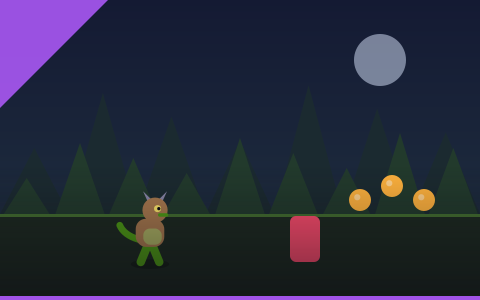
Monster Dash
Two actions, endless forest, instant restart. The best first game on the site.
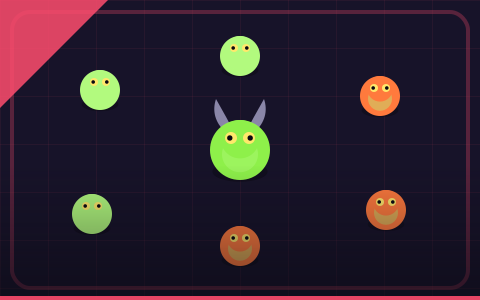
Monster Arena
Clear each round of creatures, then pick one of three permanent upgrades. Builds compound fast.

One-Tap Monster
One button, one rule: tap when the ring lines up. The purest timing game on the site.

Monster Cave Quest
Explore a branching cave for twelve treasures, then find the way out before your lantern dies.