On this page
- A boss is a state machine you are allowed to read
- How phases are triggered
- The seven attack patterns
- The three boss designs and how they differ
- Spend the first cycle watching
- Reading a telegraph faster
- When to accept a lower score
- Why boss health bars are short
- What a phase change actually does
- Attack types and their counters
- Fighting a boss you cannot beat yet
A boss is a state machine you are allowed to read
Every boss in the library is three moving parts: phases, which are sets of attacks; attacks, which telegraph, execute and then recover; and hazards, which are the shockwaves, debris and projectiles an attack leaves behind.
Two rules hold across all of them, and everything else follows:
- Nothing lands without a telegraph.
- The first cycle of a new phase telegraphs about twenty per cent longer than normal, so a new attack is always learnable rather than a surprise death.
That second rule is a teaching mechanism hidden inside a fight. The first time you see an attack you get extra time to read it. Thereafter you do not, because by then you have seen it.
How phases are triggered
There are two trigger styles, and which one a game uses changes how you should play it.
Health thresholds
Most bosses change phase at defined fractions of remaining health — typically at two thirds and one third. This means you control when the phase change happens, which has a consequence people miss: if you are low on health yourself, deliberately slowing your damage keeps you in a phase you already understand.
Timers
Monster Boss Escape cannot use health, because the Magma Titan has none — it cannot be defeated, only outlasted. Phases there rotate on a seventeen-second timer, and after the fourth the cycle loops back to the first with slightly higher attack frequency and slightly shorter telegraphs.
The loop tightens toward a floor rather than continuing indefinitely, so a skilled run still ends eventually — but it ends because the windows finally became too tight to chain, not because the game did something unreadable.
The seven attack patterns
Every boss in the library draws from the same seven attacks. Learning the counter to each one covers every boss fight on the site:
| Attack | What you see | The counter |
|---|---|---|
| Slam | A ring expands outward from the boss | Move toward the boss — the centre clears first |
| Debris | Shadows grow on the ground before rocks land | Read the floor, ignore the sky |
| Sweep | A wall crosses the arena with one marked gap | Find the lane early and commit; do not drift |
| Fan | A spread of slow projectiles along an aim line | Walk between them — they are slower than they look |
| Summon | Rings pulse outward, then smaller creatures appear | Kill the adds first; damaging the boss meanwhile is wasted |
| Armour | A blue ring and an ARMOURED label | Stop attacking entirely — hits do literally nothing |
| Dive | A target ring at your position, then a lunge | Dodge through it, never sideways |
The slam counter is the one almost nobody works out unaided. Shockwave rings expand outward from the boss, which means the safest place a quarter of a second after the slam lands is close to the boss. Every instinct says run; running keeps you exactly where the ring is going.
The three boss designs and how they differ
Ultimate Monster Challenge rotates three boss designs, and each needs a genuinely different approach rather than simply more damage.
- Hollow King — a summoner. Kill the adds first. Damage dealt to him while creatures are alive is close to wasted, because the adds will overwhelm you long before his health bar does.
- Rust Hulk — an armour cycle. He becomes immune for three seconds at a time and the game tells you, loudly. Attacking armour does nothing at all. This is a timing puzzle rather than a damage race.
- Sky Render — airborne. It dives and forces you to fight in the open, which is exactly where the shrinking arena hurts most. Dodge through the dive; sideways is where it is going.
The Void Drifter in Monster Arcade Ultimate is a fourth design and the hardest, because the fight happens in zero gravity. Your own momentum becomes part of the problem: you have to start slowing down before you reach where you want to stop.
Spend the first cycle watching
This is the single most valuable habit in boss fights and the hardest to adopt, because it feels like wasting a window.
When a phase changes, most players push damage — the boss has just been staggered, the moment feels like an opening. It is the opposite. The first cycle of a new phase is the cheapest chance you will ever get to learn the new pattern, because it telegraphs twenty per cent longer than every subsequent cycle.
Give up four seconds of damage to gain a pattern you can exploit for the rest of the fight. On a fight lasting two minutes, that trade pays for itself several times over.
Bosses on Monster Arcade never gain health when you take too long, and never do unavoidable damage. There is no penalty for a slow fight beyond your own patience.
Reading a telegraph faster
Telegraph reading is a learnable skill with three components, and only one of them is reaction speed.
- Know the vocabulary. Seven attacks. Once you can name them on sight, recognition takes almost no time at all.
- Pre-commit the response. Reacting is fast; deciding which reaction is slow. If you have already decided that a slam means move in, you skip the decision stage entirely.
- Watch the boss, not yourself. Your own position is the one thing you already know. Every frame spent looking at your own creature is a frame not spent reading the tell.
There is also a sound layer. Phase changes and most attacks carry an audio cue, and for most people audio cues arrive slightly faster than visual ones. Playing with sound on is worth a measurable amount in every boss fight here.
When to accept a lower score
In Ultimate Monster Challenge there is no healing anywhere, so health is a resource that only ever decreases across a whole run. That creates a decision most players never make consciously.
If you enter a boss wave below half health, play for survival and accept a lower score. A boss you beat slowly still ends with the boss dead; a boss you rush while fragile ends the run. The same applies in Monster Arcade Ultimate, where finishing with health remaining is worth twenty points per point of health — often more than the damage race would have earned you.
Why boss health bars are short
Every killable boss in the library dies in a few dozen hits rather than a few hundred. That is deliberate, and it follows from what a boss fight is for.
A long health bar does not make a fight harder, it makes it longer — and a longer fight means more opportunities for a single mistake to end a run you had otherwise won. The result is a fight that punishes endurance rather than understanding, which is the opposite of the point.
Short health bars also keep the teaching loop tight. If a phase lasts forty seconds rather than four minutes, a player who misreads a pattern finds out quickly and gets to try again quickly. Anything that lengthens the gap between a mistake and the next attempt makes a fight worse at teaching, regardless of how impressive the boss looks.
What a phase change actually does
A boss phase is not a difficulty increase, and treating it as one leads to the wrong response.
When a boss crosses a health threshold it changes its attack set — some attacks are retired, new ones are added, and the timing between them shifts. The fight becomes different rather than uniformly harder, and the first thirty seconds of a new phase are the most dangerous part of any boss fight for exactly that reason: you are applying a solution to a problem that has changed.
The correct response is to deliberately stop attacking for one full cycle after the roar. You will lose a few seconds of damage and you will learn the new pattern while the game is telegraphing it at its most generous — the first cycle of every phase telegraphs about twenty per cent longer than every subsequent one, which is a deliberate learning allowance.
Players who push through a phase change without watching typically take two or three hits in the first cycle, which is frequently more than the entire previous phase cost them.
Attack types and their counters
Seven attack archetypes appear across the boss fights, and each has one correct response rather than a general-purpose dodge.
- Slam. A ground impact with a radius. Move out of the circle — distance, not timing.
- Debris. Objects falling in telegraphed positions. Stand where nothing is marked and stay there.
- Sweep. A horizontal arc at a fixed height. Jump it, or be outside its reach before it starts.
- Fan. Multiple projectiles spreading outward. Move toward the gap between them, which widens with distance.
- Summon. Adds spawn. Clear them completely before returning attention to the boss.
- Armour. The boss becomes immune for a period. Stop attacking and reposition; damage during armour is wasted, not reduced.
- Dive. A committed charge along a line. Move perpendicular to it, never backwards along it.
The counters that catch people out are fan and dive, because the instinct in both cases is to run directly away — and running away from a fan keeps you in the spread, while running away from a dive keeps you in its path for longer.
Fighting a boss you cannot beat yet
Some boss fights will be beyond you for a while, and there is a productive way to spend that period rather than simply losing repeatedly.
Set a goal that is not victory. Reach phase two without taking damage. Survive a full cycle of the attack that keeps killing you. Identify what the roar precedes. Each of those is achievable in a single attempt and each teaches something a defeat does not.
The reason this works is that boss fights are knowledge problems more than execution problems. A player who knows all seven of a boss's patterns and executes imperfectly will usually beat a player with perfect execution and no pattern knowledge, because knowledge lets you be in the right place before the attack rather than reacting to it.
Practically: expect the first five attempts to be reconnaissance, and judge them by what you learned rather than by how far you got. The sixth is usually startlingly better.
Key takeaways
- Every boss attack telegraphs, and the first cycle of a new phase telegraphs about 20% longer.
- Spend that first cycle watching rather than attacking — it pays for itself over a two-minute fight.
- Move toward the boss during a slam; shockwave rings expand outward so the centre clears first.
- Each of the three boss designs needs a different approach, not more damage.
- Below half health entering a boss wave, play for survival and accept the lower score.
Frequently asked questions
Can I beat the Magma Titan in Monster Boss Escape?
No, by design. It has no health bar and you have no attack. The game is scored purely on how long you survive, which makes it the clearest pattern-reading exercise here.
Why do my hits sometimes do nothing?
The boss is armoured. The Rust Hulk armours on a cycle and the game shows a blue ring and an ARMOURED label. Hitting armour does literally nothing — wait for the gap.
Do bosses get harder the longer I take?
No. They never gain health and never do unavoidable damage. The only escalation is in Monster Boss Escape, where each full loop of the four phases shortens telegraphs toward a floor.
Is it better to dodge toward or away from an attack?
Through it. Away is where the attack is going, and it leaves you at mid-distance with a cooldown running. Through puts you behind the attacker during its recovery.
Why does the first attack of each phase seem slower?

Alex Morgan
Browser Games Editor & Interactive Gaming Content Specialist
Alex Morgan is the editorial byline for everything published on Monster Arcade — the design notes behind all 30 original games, the strategy guides, and the tuning decisions that set every difficulty curve on the site. More about our editorial byline.
Published · Last updated
Games mentioned in this guide
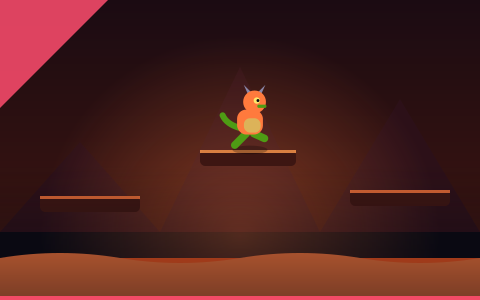
Monster Boss Escape
A boss you cannot kill, only outlast. Four phases, each with a pattern you have to learn cold.
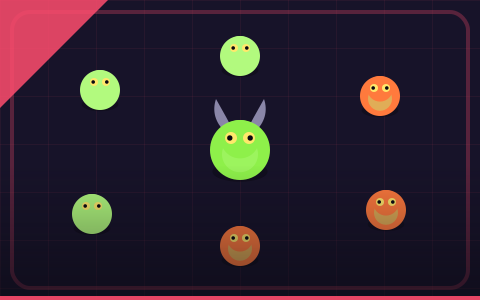
Ultimate Monster Challenge
The hardest game here. Endless waves punctuated by a boss every fifth round, in a shrinking arena.
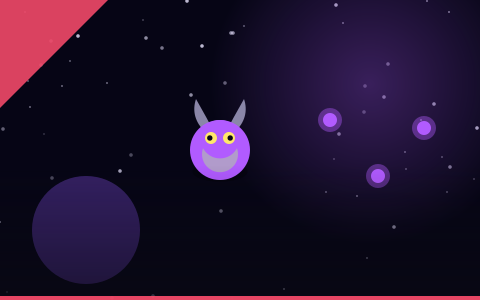
Monster Arcade Ultimate
The flagship. Three stages in one run — a runner, a collection stage and a boss fight.
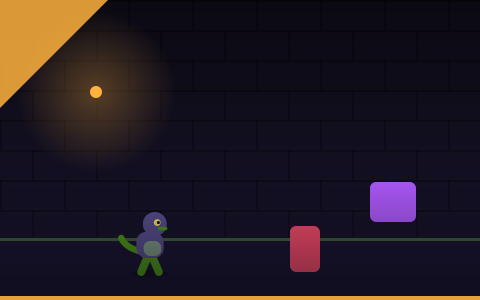
Pixel Monster Adventure
A retro-styled dungeon crawl: three keys, four wings, and a guardian that only wakes at the end.