On this page
Recognition beats reaction
Boss attacks telegraph for a quarter to half a second. That is comfortably enough time to respond if you know what you are looking at, and nowhere near enough if you have to work it out.
So the skill is not reaction speed, it is recognition. Seven patterns exist in the whole library, and each one is visually distinct in its first fraction of a second — which is deliberate, because a tell that takes half its duration to identify is only half a tell.
The seven tells
| Attack | First thing you see | Full tell |
|---|---|---|
| Slam | The boss glows and rises | A ring expands from its body |
| Debris | Circles appear on the ground | Shadows grow as rocks fall |
| Sweep | Two dashed vertical lines | A wall crosses with one gap |
| Fan | A dashed line from the boss to you | A spread of slow projectiles |
| Summon | Concentric rings around the boss | Smaller creatures appear |
| Armour | A single blue ring | An ARMOURED label; damage does nothing |
| Dive | A target ring at your position | The boss lunges to it and returns |
Colour does most of the work: red tells are damage, blue is armour, violet is a summon. If you learn nothing else, learn that a blue ring means stop attacking.
Look at the ground, not the boss
Three of the seven tells appear on the floor rather than on the creature: debris shadows, sweep gap markers and dive target rings.
That is not an accident. In a fight where the boss is large and above you, the floor is where your own position is, and a tell drawn at your feet arrives in the same part of your vision you already need to be watching.
The practical habit: default your gaze to the middle distance between yourself and the boss. You catch body tells peripherally and ground tells directly, which is the right way round because the ground tells are the ones with the shortest windows.
Phase changes reset your recognition
A phase change introduces attacks you have not seen in this fight. Recognition you built over the previous ninety seconds does not transfer, and this is where otherwise-good players lose runs.
The compensation is built in: the first cycle of a new phase telegraphs about twenty per cent longer. Spend it watching. Identify which of the seven patterns are now in play and where each is aimed, then resume fighting.
Four seconds spent this way on a two-minute fight pays back several times over, and it is the single habit that most separates players who beat Ultimate Monster Challenge bosses from players who do not.
Building the habit
- Play Monster Boss Escape for five runs without trying to score. You cannot attack, so there is nothing to do but watch. It is the purest recognition trainer here.
- Name the attack out loud as it telegraphs. It sounds ridiculous and it forces the identification to happen consciously until it stops needing to.
- Pre-commit the counter. Slam means move in. Blue ring means stop attacking. Dive means dodge through. Say them once before a fight.
- Play with sound on. Every phase change and most attacks carry an audio cue, and audio arrives slightly faster than visual for most people.
Sound is half the tell
Every boss attack in the library carries an audio cue distinct from the others, and every phase change carries a roar.
For most people an audio cue arrives slightly faster than a visual one, which on a quarter-second telegraph is a meaningful fraction of your window. It also arrives regardless of where you are looking, which is exactly the property you want from a warning.
Playing muted is the most common self-inflicted handicap on this site, and boss fights are where it costs the most.
Building a mental checklist
Pattern recognition feels like intuition and is actually a checklist you run quickly. Making it explicit speeds up the process considerably.
Four questions, in order, asked the moment a telegraph starts:
- Is it aimed at me or at a place? Aimed attacks are dodged by moving; placed attacks are dodged by not being there.
- Is it a line or an area? Lines are escaped sideways. Areas are escaped outward.
- Does it commit? A committed attack can be baited and then punished during recovery. An uncommitted one tracks you and must be outlasted.
- Does it leave something behind? Lingering hazards change where the safe ground is for the next ten seconds, which matters more than the attack itself.
After a few fights this runs in well under a second and stops feeling like a list at all. Until then, asking the questions deliberately is much faster than waiting for instinct to arrive on its own.
Lingering hazards change the floor
Some boss attacks leave something behind, and the residue frequently matters more than the attack that created it.
A pool of fire, a patch of ice, scattered debris: each removes part of the arena for the next several seconds. A player tracking only the boss will dodge an attack perfectly and then back into the consequences of the last one.
The habit that fixes this is to check the floor after every attack rather than only the boss. Where the safe ground is has changed, and the next dodge needs to be planned against the new shape of the arena rather than the one you learned at the start of the phase.
Key takeaways
- Boss fights are won by recognition, not reaction — the windows are generous if you know what you are seeing.
- Seven tells cover the whole library, and colour does most of the identification work.
- Three of the seven appear on the ground, so default your gaze to the middle distance.
- A phase change resets your recognition, and its first cycle telegraphs 20% longer to compensate.
Frequently asked questions
What does a blue ring mean?
Armour. The boss is immune for about three seconds and hits do literally nothing. Stop attacking and reposition instead.
Where should I be looking during a boss fight?
The middle distance between you and the boss. Body tells register peripherally; ground tells — debris, sweep gaps, dive rings — need direct attention.
How do I learn a new phase without dying?
Spend its first cycle watching rather than attacking. That cycle telegraphs 20% longer specifically so it can be learned.
How many attacks does a boss have?
Do audio cues matter?
Should I memorise the order of attacks?

Alex Morgan
Browser Games Editor & Interactive Gaming Content Specialist
Alex Morgan is the editorial byline for everything published on Monster Arcade — the design notes behind all 30 original games, the strategy guides, and the tuning decisions that set every difficulty curve on the site. More about our editorial byline.
Published · Last updated
Games mentioned in this guide
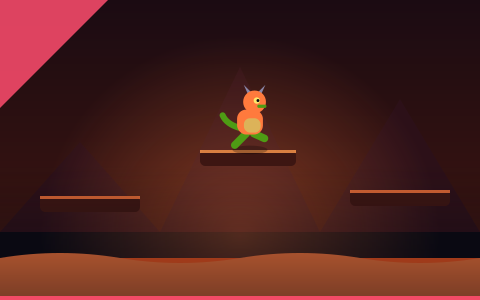
Monster Boss Escape
A boss you cannot kill, only outlast. Four phases, each with a pattern you have to learn cold.
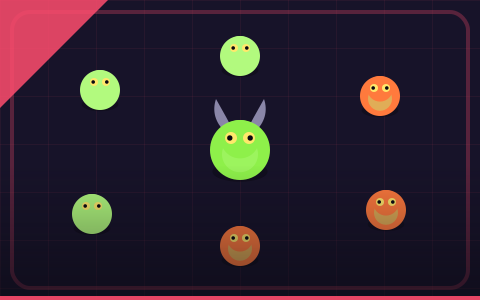
Ultimate Monster Challenge
The hardest game here. Endless waves punctuated by a boss every fifth round, in a shrinking arena.

Monster Arcade Ultimate
The flagship. Three stages in one run — a runner, a collection stage and a boss fight.