On this page
Different, not tougher
The easiest way to make a boss is to take a normal enemy, multiply its health by twenty and its damage by three. It works, in the sense that the fight takes longer, and it teaches the player nothing.
A boss should ask a different question. The three designs in Ultimate Monster Challenge each ask one:
- Hollow King — 'can you prioritise?' He summons, and damage dealt to him while adds are alive is close to wasted.
- Rust Hulk — 'can you wait?' He armours on a cycle, and attacking armour does literally nothing.
- Sky Render — 'can you commit?' It dives, and the correct response is dodging through rather than away.
None of those is solved by more damage, which is the test of whether a boss is a boss or just a large enemy.
Shared attack vocabulary
All bosses draw from the same seven attacks: slam, debris, sweep, fan, summon, armour and dive. That is deliberate rather than economical.
A player who has learned to counter a slam in one fight has learned it in all of them. What differs between bosses is the combination and the rhythm, which means a new boss is a new arrangement of known problems rather than a new problem set.
That is the only way a small studio can ship several bosses that are all fair. Seven well-tuned attacks recombine into far more distinct fights than seven half-tuned unique ones.
Phases as a teaching structure
A boss changes phase at defined health thresholds, and each phase brings attacks the player has not seen in this fight.
The mechanism that makes this fair is the first-cycle bonus: the first cycle of every new phase telegraphs about twenty per cent longer than normal. The first time you see an attack you get extra time to read it; thereafter you do not.
It is a teaching mechanism hidden inside a fight, and it is invisible — no player has ever told us they noticed it, and every player benefits. That is roughly the ideal for this kind of system.
A boss with no health bar
Monster Boss Escape removes the player's ability to fight back entirely. There is no health bar and no attack button.
It sounds punishing and it is liberating. With no damage to deal, there is no tension between offence and defence, no optimal moment to push, and no build to get wrong. There is only the pattern in front of you and whether you have learned it.
Phases there rotate on a timer rather than on health, and after the fourth the cycle loops with slightly higher frequency and slightly shorter telegraphs — approaching a floor rather than escalating forever, so a skilled run ends from a window finally being too tight rather than from something unreadable.
Rules a boss must never break
- No unavoidable damage. Every attack has a counter, and the counter is available from every position.
- No health gain. A boss that heals when you are slow punishes caution, which is the opposite of what a teaching fight should do.
- No hidden state. Armour, phase and remaining health are all visible. A player should never wonder whether they are making progress.
- No off-screen attacks. Everything that can hurt you originates somewhere you can see.
- No random damage values. The same attack always costs the same, so health management is planning rather than hoping.
Making a boss feel large
Scale is a rendering and audio problem rather than a mechanical one, and it is solved with four cheap tricks.
- Draw it partially off-screen. A creature whose full extent you cannot see reads as bigger than one that fits.
- Animate slowly. A slow cycle reads as weight; the same silhouette animated quickly reads as small and fast.
- Shake on impact. Sparingly, and only for genuinely heavy events.
- Use low frequencies. A roar built from detuned sawtooth waves around 60-110 Hz does more for perceived size than any amount of extra pixels.
None of it changes the fight. All of it changes whether the fight feels like an event.
Designing a phase
A boss with three phases is not a boss with three difficulty levels. Each phase should be a different question, and the sequence should have an argument to it.
The structure that works is: phase one teaches the boss's vocabulary with generous timing; phase two combines those attacks and adds pressure; phase three removes something the player has been relying on — space, time, or a safe position — rather than adding another attack.
That final move is what makes an ending feel like a climax instead of a longer version of the middle. A shrinking arena, a hazard on the floor you have been using, an attack that covers the ground you have been retreating to: each takes away a habit rather than testing a reflex.
The constraint is that nothing removed may be the only option. If the safe position disappears and no alternative exists, the phase is not difficult, it is a scripted death — and players can always tell the difference.
Deciding whether a boss can be beaten
Not every boss on this site is killable, and the choice is about what the game is measuring.
A killable boss is a test with an answer. It suits games where completion is the goal and where the fight is the climax of a designed sequence.
An unkillable boss — one you survive or escape rather than defeat — suits endless games, where a definite ending would contradict the structure. The pursuing creature in an escape game is not a failure to implement a health bar; it is a hazard with personality.
What both require is a clear win condition. A fight where the player cannot tell whether they are making progress is the worst outcome, and it is what happens when this decision is left implicit.
Key takeaways
- A boss should ask a different question, not the same question with more health.
- Seven shared attacks recombine into distinct fights and stay fair, which unique attacks per boss would not.
- The first cycle of every new phase telegraphs 20% longer — invisible teaching inside a fight.
- No unavoidable damage, no healing, no hidden state, no off-screen attacks, no random damage.
Frequently asked questions
Why do all your bosses use the same attacks?
So a counter learned in one fight works in all of them. What differs is combination and rhythm, which produces more distinct fights than unique attacks would.
Do bosses heal if I am too slow?
Never. A boss that punishes caution is the opposite of a teaching fight.
Why does one boss have no health bar at all?
Removing damage removes every competing consideration, leaving only pattern reading — which makes it the clearest teaching fight on the site.
How many phases should a boss have?
How do you make a boss feel large without more detail?

Alex Morgan
Browser Games Editor & Interactive Gaming Content Specialist
Alex Morgan is the editorial byline for everything published on Monster Arcade — the design notes behind all 30 original games, the strategy guides, and the tuning decisions that set every difficulty curve on the site. More about our editorial byline.
Published · Last updated
Games mentioned in this guide
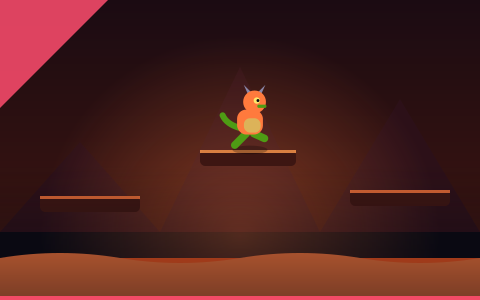
Monster Boss Escape
A boss you cannot kill, only outlast. Four phases, each with a pattern you have to learn cold.
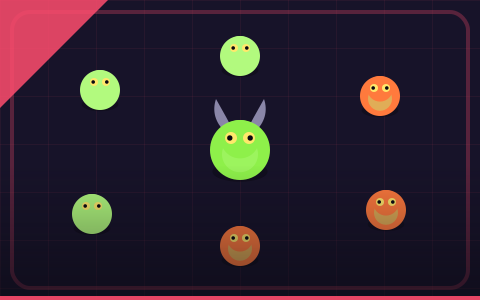
Ultimate Monster Challenge
The hardest game here. Endless waves punctuated by a boss every fifth round, in a shrinking arena.
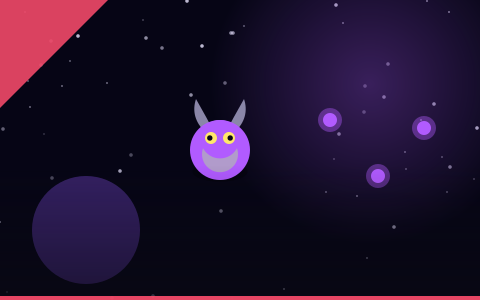
Monster Arcade Ultimate
The flagship. Three stages in one run — a runner, a collection stage and a boss fight.