On this page
The first ten seconds are for watching
Almost everybody opens a boss fight by attacking, and almost everybody should not.
The first ten seconds of a fight are the cheapest information you will ever get. The boss is at full health, which means its first phase is the simplest set of attacks it has, and the first cycle of that phase telegraphs about twenty per cent longer than every subsequent one.
Spend it watching. Identify which of the seven attack patterns this boss is using, and where each one is aimed. Then start fighting with a plan rather than a reflex.
Treat a phase change as a lesson, not an opening
When a boss changes phase, the visual and audio cue reads like a stagger and people push damage. It is the opposite of an opening.
A phase change means new attacks you have not seen, delivered with a one-time extended telegraph. Spending that cycle attacking wastes the only cheap look you get at the new pattern, and you will then spend the rest of the phase learning it expensively.
Give up four seconds of damage. On a two-minute fight it pays back several times over.
Know when attacking is literally pointless
The Rust Hulk in Ultimate Monster Challenge armours itself for three seconds at a time. While armoured, every hit does exactly nothing — the game shows a blue ring and an ARMOURED label so there is no ambiguity.
Attacking armour is not merely inefficient, it is actively harmful: every swing commits you for a moment, and being committed near a boss is how you take damage.
The same logic applies to the Hollow King, which summons. Damage dealt to him while adds are alive is close to wasted, because the adds will overwhelm you long before his health bar moves. Kill the summons first.
The attack-counter cheat sheet
| Telegraph | Attack | Do this |
|---|---|---|
| Boss raises up, ring pulses outward | Slam | Move toward the boss — the centre clears first |
| Circles appear on the ground | Debris | Watch the floor, not the sky |
| Two dashed vertical lines | Sweep | Get inside them and commit |
| A dashed aim line from the boss | Fan | Walk between the projectiles |
| Concentric rings around the boss | Summon | Back off; adds are coming |
| A blue ring | Armour | Stop attacking entirely |
| A target ring at your feet | Dive | Dodge through it, not sideways |
Deciding a fight is not winnable today
This is a real skill and nobody talks about it.
In Ultimate Monster Challenge there is no healing anywhere, so health only decreases across a whole run. If you enter a boss wave below half health, the highest-value play is usually to fight defensively and accept a lower score — a boss beaten slowly still ends with the boss dead, while a boss rushed while fragile ends the run.
In Monster Arcade Ultimate this is explicit: finishing with health remaining is worth twenty points per point of health, which is frequently more than the damage race would have earned.
And in Monster Boss Escape the boss cannot be beaten at all — the only score is survival time, which makes patience the entire strategy.
Fight the adds, not the boss
Worth repeating on its own because it is the single most common way a boss run is lost while the player believes they are doing well.
Against a summoner, the health bar moving is not progress if the arena is filling up. Three summons left alive for twenty seconds will do more damage to you than the boss will, and they will do it while you are committed to attack animations aimed elsewhere.
The correct sequence is: clear the adds completely, then return to the boss, then expect another summon. A fight that looks slow because you keep being pulled away from the boss is usually a fight you are winning.
Damage windows
Every boss has moments when attacking it is free and moments when attacking it is how you die, and telling them apart is most of the fight.
The free windows are the recovery frames after a committed attack. A boss that has just slammed the ground is briefly stationary and vulnerable, and that pause is deliberately long enough to punish it. This is where essentially all of your damage should come from.
The expensive moments are everything else, and particularly the wind-up. Attacking a boss that is telegraphing means you are committed to your own animation while its attack lands, which is the single most common way a winning boss run ends.
The discipline is therefore: do nothing during the telegraph, dodge, then attack during recovery, then reset to neutral and wait. It feels slow and it is roughly twice as fast as attacking opportunistically, because none of the damage is being traded back.
Bait, dodge, punish
Against a boss with committed attacks, the fastest approach is to provoke rather than to wait.
Moving into the range that triggers an attack you know how to dodge puts the fight on your schedule. You chose the attack, you were ready for it, and you are already in position for the recovery window afterwards — which is where all of your damage comes from anyway.
The alternative, standing back and reacting to whatever the boss decides, means facing a random attack from a random position with no plan. It feels safer and it is slower and more dangerous, because more time in the fight is more opportunities to be caught by something.
Key takeaways
- Spend the first ten seconds of a fight watching rather than attacking.
- A phase change is a free lesson with an extended telegraph, not an opening for damage.
- Against armour, stop attacking entirely; against a summoner, kill the adds first.
- Below half health entering a boss wave, play defensively and accept the lower score.
Frequently asked questions
Should I attack during a phase change?
No. Spend that cycle learning the new pattern — it telegraphs 20% longer than it ever will again.
Why are my hits doing nothing?
The boss is armoured. Look for the blue ring and the ARMOURED label, and wait for the gap.
Which way should I dodge?
Through the attack. Away is where it is going and leaves you at mid-distance with a cooldown running.
When is it safe to attack a boss?
Should I kill summoned creatures or focus the boss?
How many attempts should a boss take to learn?

Alex Morgan
Browser Games Editor & Interactive Gaming Content Specialist
Alex Morgan is the editorial byline for everything published on Monster Arcade — the design notes behind all 30 original games, the strategy guides, and the tuning decisions that set every difficulty curve on the site. More about our editorial byline.
Published · Last updated
Games mentioned in this guide
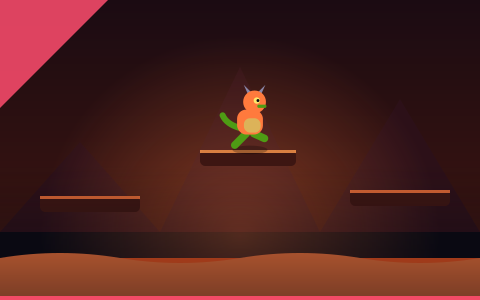
Monster Boss Escape
A boss you cannot kill, only outlast. Four phases, each with a pattern you have to learn cold.
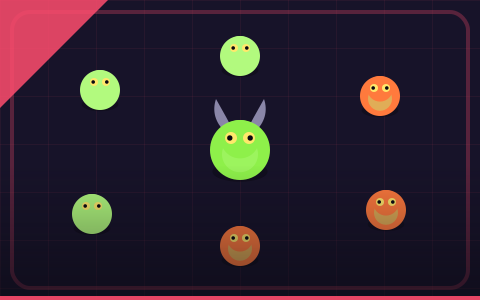
Ultimate Monster Challenge
The hardest game here. Endless waves punctuated by a boss every fifth round, in a shrinking arena.

Monster Arcade Ultimate
The flagship. Three stages in one run — a runner, a collection stage and a boss fight.