On this page
Telegraphs are the whole game
Before any enemy on this site does something that can hurt you, it does something visible that cannot. A charger crouches. A lunger rears back. A spitter glows. A boss flashes the colour of the attack it is about to use. Those windows run between a quarter and half a second — short enough to demand attention, long enough that a person can genuinely act on them.
This is not decoration; it is the contract that makes a battle game fair. If an attack could land without warning, the correct strategy would be to move randomly forever and the game would have no skill ceiling. Because every attack announces itself, the correct strategy is to watch — and watching improves.
The practical consequence is the most useful sentence in this guide: look at the enemy that is about to act, not the enemy that is closest. Proximity is a poor threat signal. A brute two steps away that has just finished an attack is safer than a lunger across the arena that has just started winding up.
What each creature actually does
There are six creature archetypes in the library. Learning them once covers every battle game, because they are the same objects with different tuning:
| Creature | Behaviour | Telegraph | How to handle it |
|---|---|---|---|
| Crawler | Walks a patrol or ambles toward you | None — always dangerous | A moving wall. Time your pass, do not out-run it. |
| Snapper | Fast, fragile, straight at you | None | Kill on sight; they are cheap and they add up. |
| Gorer | Crouches, then charges in a line and overshoots | 0.34 s crouch | Step sideways, never backwards. Punish the overshoot. |
| Spitter | Holds distance and fires slow globs | 0.42 s glow | Ignore while finishing something else; walk around the glob. |
| Brute | Slow, high health, lunges in close | 0.5 s wind-up | Only dangerous mid-lunge. Spacing beats damage. |
| Floater | Drifts on a sine path | None | Predictable. Treat it as terrain. |
Types are introduced on a schedule rather than randomly. In Monster Arena, crawlers appear immediately, snappers from round two, gorers from round four and spitters from round seven. You always meet a creature alone before you meet it in a crowd, because meeting a brute in your first ten seconds teaches you nothing.
The mid-distance trap
The most dangerous place to stand in almost every battle game is mid-distance: close enough to be reached by a lunge, far enough that you cannot punish anything.
Players drift there naturally because it feels cautious. It is the opposite. Commit instead — either be close enough to act during the enemy's recovery window, or far enough that every incoming attack has a travel time you can see.
Ultimate Monster Challenge demonstrates this most clearly, because the arena shrinks permanently at waves ten, twenty and thirty. By wave thirty the fighting space is about a third of its original area, wide circling stops working entirely, and the game becomes short precise repositioning between attacks. Players who relied on kiting hit a wall at exactly wave twenty.
How waves escalate
Wave-based games are run by a director that decides how many creatures spawn, how fast they arrive and how many may be alive at once. The count grows roughly with the wave number plus a fractional power of it, rather than linearly, which keeps late waves hard without turning them into a slideshow.
There is always a breather between waves — a couple of seconds where nothing spawns. That pause is not generosity. It is where the game tells you what is coming, and it is where you are meant to reposition to the centre of the arena rather than standing wherever the last kill left you. Doing that one thing every single wave is worth more than any amount of extra reaction speed.
A live count of remaining creatures is shown during every wave. If the number is not going down, you are dodging rather than fighting — which is sometimes correct and is usually how a run stalls.
Upgrades and why the first pick decides the run
Monster Arena offers three upgrades from a pool of nine at the end of every cleared round, and you keep the one you choose for the rest of the run. They stack, which means an early pick affects every round that follows.
Across the builds we have tested, attack speed is the strongest early pick in almost every case. It compounds with every damage effect you take later, and it shortens the window during which you are committed to a swing — so it is simultaneously offensive and defensive. Raw damage is a better late pick, once brutes have enough health that killing one is a multi-hit commitment.
The general principle transfers beyond this game: in any compounding system, prefer the multiplier early and the flat bonus late.
Dodging properly
Every battle game here has a dodge with a brief invulnerability window — around a quarter of a second. The instinct is to dodge away from an attack. That is usually wrong.
Dodge through it. Away is where the attack is going, and away leaves you at mid-distance with a cooldown running. Through puts you behind the attacker during its recovery, which is the only free damage window in most fights.
This is most obvious against a charging gorer. Its charge is a straight line with an overshoot built in specifically to give you a punish window. Backing away means being chased down the line; stepping sideways or dodging through means the creature sails past and spends half a second recovering with its back to you.
Health is a resource, not a health bar
The habit that separates long battle runs from short ones is thinking about health as something you spend rather than something you have.
In Monster Arena, health does not refill between rounds unless an upgrade heals you. In Ultimate Monster Challenge there is no healing anywhere at all. Both of those mean the first third of a run is where the rest of it is decided — not by how fast you clear, but by how much health you still have when the game starts asking real questions.
Concretely: taking an extra ten seconds over an early round to avoid one hit is almost always worth it, and rushing an early round to save ten seconds almost never is. There is no clock bonus in either game.
Reading a telegraph
Every attack that can hurt you is announced before it lands, and the announcement has three parts that arrive in a fixed order.
- The freeze. The creature stops moving. This is the earliest signal and the easiest to see peripherally, because motion stopping is something human vision is unusually good at noticing.
- The wind-up. A visible pose change — a raised claw, a coiled body, a widening mouth — that indicates which attack is coming.
- The flash. A brief colour shift immediately before the attack commits. By the time you see this, the decision should already be made.
The practical technique is to respond to the freeze rather than to the flash. Freezes last between a quarter of a second and half a second depending on the creature and the difficulty, and a player reacting at the start of one has several times the window of a player reacting at the end.
This is also why standing still is a legitimate tactic in battle games and nowhere else. A stationary player can watch the whole arena; a moving player is spending attention on their own position. Against a wave you do not understand yet, the correct opening move is frequently no move at all.
Positioning beats damage
The single largest difference between a short battle run and a long one is where the player stands, and it comes down to two habits.
Never fight with your back to a wall. Arena edges remove half your escape options, and creatures that push toward you will pin you there. Fighting from roughly the centre is worse for cornering enemies and much better for surviving them.
Fight one side at a time. Creatures approach from wherever they spawned, and a player standing between two groups is being attacked from two directions with one facing. Moving to put both groups on the same side costs a second and converts an impossible situation into an ordinary one.
Both are more valuable than any amount of attack optimisation, because the failure mode in these games is almost never 'I could not kill things fast enough'. It is 'I was somewhere I could not leave'.
Wave composition
Waves are not random. Each is assembled from a budget, and reading the composition tells you how to play the next thirty seconds.
Every creature type has a cost, and a wave spends a budget that grows as the run progresses. Early waves buy many cheap creatures; later waves can afford a single expensive one, or a mixed group, and the mixture is what makes a wave interesting rather than merely populous.
Practically, three shapes recur. Swarm waves are many weak chasers — keep moving, never stop, let them string out behind you. Mixed waves pair chasers with ranged attackers — kill the ranged ones first, always, because they are what stops you from controlling your own position. Elite waves are one or two heavy creatures with telegraphed attacks — this is a boss fight in miniature and should be played like one.
Recognising which you are in during the spawn animation, rather than after the first hit, is worth more than any amount of attack speed.
Where to start in this category
Monster Arena is the canonical battle game and the right first choice: readable creatures, a clear round structure and an upgrade system that makes each run feel different.
For a pure pattern-reading exercise, Monster Boss Escape removes your ability to fight back entirely. With no damage to deal there is no tension between offence and defence, no optimal moment to push and no build to get wrong — only the pattern in front of you.
Monster Cannon Challenge sits in this category and has no time pressure at all, which makes it the accessible option if reaction speed is the barrier rather than interest.
Monster Arcade Ultimate is the flagship and finishes with a three-phase boss fought in zero gravity, where your own momentum becomes part of the problem.
Key takeaways
- Watch the enemy that is winding up, not the one that is nearest — proximity is a poor threat signal.
- Mid-distance is the worst place to stand: be inside punish range or outside reach, never between them.
- Reposition to the centre of the arena during every between-wave breather, without exception.
- Dodge through an attack rather than away from it; away is where the attack is going.
- In compounding upgrade systems, take the multiplier early and the flat bonus late.
Frequently asked questions
Is there any gore in the battle games?
No. Defeated creatures burst into coloured particles. The whole site uses a stylised arcade look rather than realistic injury.
Why can't I hurt a brute standing next to me?
Creatures with a telegraph are only dangerous during their attack, and you can only damage them within your own attack range and arc. A brute idling beside you is safe for both of you until one of you commits.
What should my first upgrade be in Monster Arena?
Attack speed, in almost every run. It compounds with every later damage upgrade and shortens the window in which you are vulnerable.
Are the battle games playable on a phone?
Yes, using a virtual stick plus attack and dodge buttons. They are the most demanding category on touch, so start elsewhere if you are new to mobile arcade games.
Does health carry over between rounds?

Alex Morgan
Browser Games Editor & Interactive Gaming Content Specialist
Alex Morgan is the editorial byline for everything published on Monster Arcade — the design notes behind all 30 original games, the strategy guides, and the tuning decisions that set every difficulty curve on the site. More about our editorial byline.
Published · Last updated
Games mentioned in this guide
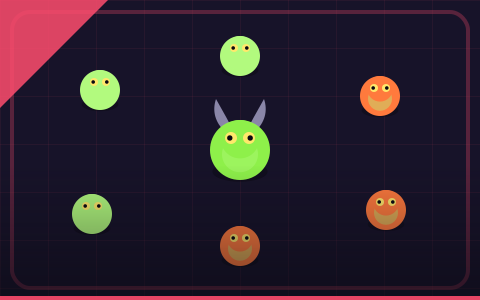
Monster Arena
Clear each round of creatures, then pick one of three permanent upgrades. Builds compound fast.
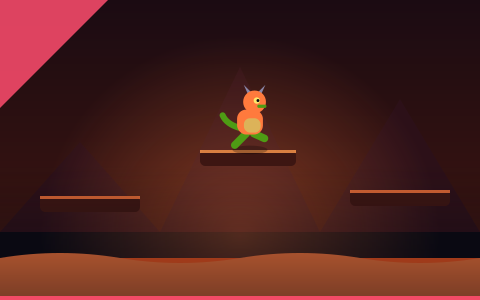
Monster Boss Escape
A boss you cannot kill, only outlast. Four phases, each with a pattern you have to learn cold.
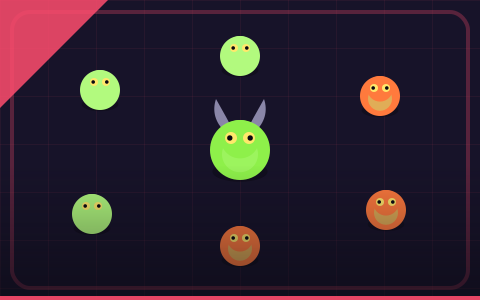
Ultimate Monster Challenge
The hardest game here. Endless waves punctuated by a boss every fifth round, in a shrinking arena.

Monster Cannon Challenge
Launch a small fire imp at towers of blocks. Angle and power, fifteen stages, no time pressure.
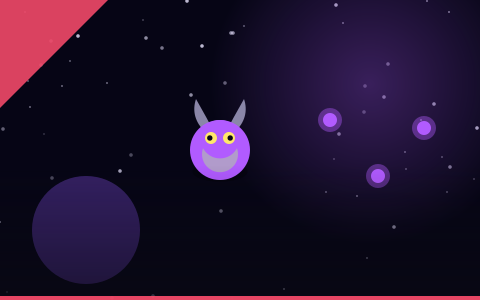
Monster Arcade Ultimate
The flagship. Three stages in one run — a runner, a collection stage and a boss fight.