On this page
- What 'short' actually has to mean
- The five that genuinely fit
- The ones that look short and are not
- The instant-restart trap
- Matching the game to the break
- Why short sessions suit this genre specifically
- Playing on a phone in a short break
- Stopping cleanly
- Short sessions and long-term improvement
- Matching a game to the time you actually have
- The single-game session
- Games that respect an interruption
What 'short' actually has to mean
A game is not short because a run is short. A game is short when the whole interaction is short — which includes finding the page, understanding the controls, playing, and being willing to stop.
That last one is the part most 'quick games' fail. A game with an instant restart and no natural stopping point is not a two-minute game; it is a forty-minute game that starts by lying to you.
So a genuinely short game needs four properties:
- It starts immediately. No loading screen, no tutorial, no menu to navigate.
- It needs no explanation. If you have to read something, the break is over before you play.
- A run ends on its own. Under about ninety seconds, reliably.
- It has a natural stopping point. Something that makes finishing feel like a decision rather than an interruption.
The five that genuinely fit
| Game | Typical run | Why it works | One-handed? |
|---|---|---|---|
| One-Tap Monster | 20-60 s | One button, zero explanation, ends decisively on a miss | Yes |
| Falling Monster Frenzy | 30-90 s | Two inputs, no learning curve, one hit ends it | Almost |
| Monster Dash | 40-120 s | Restarts in about a second, so ten attempts fit in three minutes | No |
| Shadow Beast | 30-90 s | A streak is a natural unit — 'one more streak' is a real stopping point | No |
| Monster Tunnel | 40-150 s | Smooth curve, no surprises, easy to stop mid-flow | Yes |
One-Tap Monster is the strongest recommendation of the five, and the reason is boring: it is the only game here that works while you are holding something else. A single tap anywhere on the play area, no directional input, no second hand.
The ones that look short and are not
Several games here have short runs and are still bad choices for a genuine break, for different reasons.
- Monster Coin Rush — runs are one to three minutes, but the ×10 multiplier makes every run feel like it was almost the good one. It is the most replayed game on the site precisely because it is the hardest to walk away from.
- Lava Beast — runs are often under ninety seconds, and they end so abruptly that the instinct to retry immediately is close to reflexive.
- Monster Hunter Dash — short runs, but it is rated Hard and the early failures are frustrating rather than instructive. A bad choice for a break in a bad mood.
- Monster Jump Challenge — genuinely short and genuinely good, with one caveat: it has a completion state, so 'I nearly finished' is a powerful reason to start again.
And the clearly wrong choices: any of the adventure games, all of which run three to ten minutes with no safe point to abandon, and Monster Arcade Ultimate, which is three stages and about eight minutes.
The instant-restart trap
The instant restart is the best feature of this genre. It is also the reason a two-minute break becomes twenty minutes, and it is worth understanding why rather than just resolving to do better.
A failed run costs you almost nothing — perhaps a second of your time — while the next run carries the full promise of the previous one. That is an extremely favourable-looking trade at every individual moment, and it stays favourable-looking forever, which is exactly why it does not self-limit.
Two things genuinely help:
- Decide the number before you start. 'Five runs' is a real boundary in a way that 'a couple of minutes' is not, because you can count runs and you cannot feel minutes.
- Stop on a good run, not a bad one. Stopping after a failure leaves the loop open; stopping after a personal best closes it. This is the single most effective habit we know and it feels wrong every time.
There is a performance argument for the same habit. Reaction and classification degrade measurably with frustration, so the twentieth consecutive attempt is usually worse than the fifth. Stopping while you are ahead is not only restraint, it is usually also the higher-scoring choice.
Matching the game to the break
| The situation | Play this | Why |
|---|---|---|
| Standing, one hand free | One-Tap Monster | Single tap, no direction |
| Two minutes at a desk | Monster Dash | Instant restart, honest feedback |
| Wound up and wanting to focus | Monster Tunnel | No surprises, no feints, continuous flow |
| Wound up and wanting to stop thinking | Falling Monster Frenzy | Two inputs and no decisions beyond where to stand |
| Ten minutes and actually relaxing | Monster Cannon Challenge | No clock anywhere; take a minute over a shot if you like |
| Testing whether you have improved | Shadow Beast | A streak is a clean, comparable number |
Why short sessions suit this genre specifically
There is a real argument that arcade games are better in short bursts, and it is not about self-control.
The learning in these games happens between runs, not during them. You notice what went wrong, form a theory, and test it on the next attempt. That cycle works best when attention is fresh, and attention degrades faster than most people expect — classification speed in particular falls off well before you feel tired.
In practice, most personal bests on this site are set within the first ten minutes of a session. A twenty-minute session of attentive play beats an hour of tired play by a wide margin, and five focused runs beat twenty distracted ones.
So the short break is not a compromised version of the real thing. It is closer to the format the genre was designed for.
Playing on a phone in a short break
Most short-break play happens on a phone, and two things matter there that do not on desktop.
Thumb reach. Controls sit in the lower corners because that is where a thumb naturally rests when a phone is held one-handed. Games needing two buttons need two thumbs; games needing a joystick need a stable grip and are genuinely harder to play standing up.
Interruption. A phone break gets interrupted. Every game here pauses automatically when the tab is backgrounded, which means an incoming call does not end your run — it pauses it, and you can resume.
Monster arcade games on mobile covers the control layouts in full.
Stopping cleanly
A practical problem with short sessions: the natural stopping point is after a good run, and a good run is exactly when you least want to stop.
The trick that works is deciding the stopping condition before you start. Five runs, or one personal best, or three minutes — any of them, chosen in advance. Deciding afterwards means deciding while the game is actively arguing with you, and the game usually wins.
This is also why every game here returns to a clean game-over screen rather than restarting automatically. An automatic restart removes the moment where you get to choose, and a session with no decision points in it is a session that ends when something interrupts you rather than when you meant it to.
Short sessions and long-term improvement
A short session is not a compromise, and there is a specific reason worth spelling out.
Improvement in these games comes from noticing something and testing it. That cycle is attention-limited rather than time-limited: after about twenty minutes, most players stop noticing and start repeating, which means the twenty-first minute is spent rehearsing habits rather than examining them.
So five short sessions across a week beats one long session by a substantial margin, and not by a little. The best practical schedule we know is three to five minutes at a time, several times a day, on one game, watching one number.
Matching a game to the time you actually have
The length metadata on every game page is not decorative. Four values appear and each predicts a different kind of session.
- Endless. A run lasts until you fail, typically thirty seconds to three minutes. The most interruptible category: you can stop after any run with nothing lost.
- Wave. Structured rounds with a natural pause between them. Runs are longer — three to eight minutes — and the pauses are genuine stopping points.
- Short. A designed experience with an ending, usually under five minutes. Best played in one sitting.
- Level. A sequence of stages with progress that persists within the session but not beyond it. The least interruptible: stopping halfway means restarting.
If you have five minutes, endless is the right choice and level is the wrong one, and the difference is not about how long the content is — it is about where you are allowed to stop.
The single-game session
A specific recommendation that runs against how most people use a games site: pick one game and stay on it for the whole session.
Switching games resets your calibration. Each game has its own jump arc, its own telegraph lengths, its own spacing. Three games in ten minutes means three periods of recalibration and very little actual play at your real level.
Staying on one game for five minutes gets you past calibration in the first run and leaves the rest of the session operating at your ceiling — which is both more enjoyable and where improvement actually happens.
Browsing is for a different mood, and there is nothing wrong with it. But a browsing session and a playing session are different activities, and the mistake is expecting a personal best out of the first one.
Games that respect an interruption
Some games here handle being abandoned mid-run better than others, and if your sessions are unpredictable that matters more than difficulty does.
Every game pauses automatically when the tab loses focus, so nothing is lost by walking away. What differs is what you come back to.
In an endless game, a paused run resumes exactly where it was and the difficulty curve resumes with it — no penalty at all. In a wave game you return between or during a round with your state intact. In a level game you return mid-level, which is fine, but closing the tab entirely means starting the sequence over.
So the rule for genuinely unpredictable time is: endless and wave games are safe to start; level games are worth saving for a stretch you expect to keep. The games index shows the length type on every card, which makes that a one-glance decision.
Key takeaways
- A short game needs to start instantly, need no explanation, end on its own and have a natural stopping point.
- One-Tap Monster is the only game here that genuinely works one-handed while standing.
- The instant restart is the genre's best feature and the reason short breaks become long ones.
- Decide a number of runs before starting, and stop on a good run rather than a bad one.
- Most personal bests are set in the first ten minutes of a session — short play is not a compromise.
Frequently asked questions
Which monster game is best for a two-minute break?
One-Tap Monster. A full run is usually under a minute, it needs no explanation, and it is the only game here comfortable one-handed.
What happens if I get interrupted mid-run?
The game pauses automatically when the tab is backgrounded, so a call or a notification pauses your run rather than ending it.
Why do I always play for longer than I meant to?
Because a failed run costs about a second while the next run carries the full promise of the last one. Deciding a number of runs in advance is the only reliable fix.
Are short sessions worse for improving?
The opposite. Classification speed degrades with fatigue, and most personal bests are set in the first ten minutes of a session.
What happens to my run if I switch tabs?

Alex Morgan
Browser Games Editor & Interactive Gaming Content Specialist
Alex Morgan is the editorial byline for everything published on Monster Arcade — the design notes behind all 30 original games, the strategy guides, and the tuning decisions that set every difficulty curve on the site. More about our editorial byline.
Published · Last updated
Games mentioned in this guide
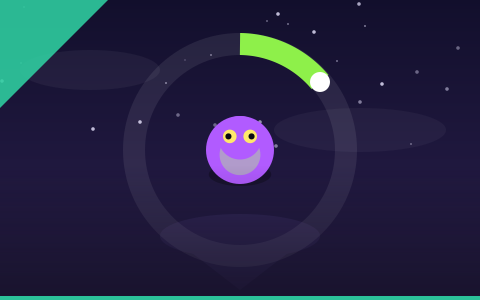
One-Tap Monster
One button, one rule: tap when the ring lines up. The purest timing game on the site.
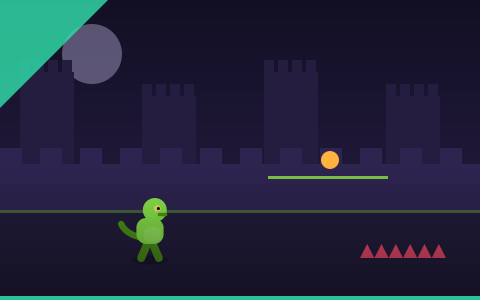
Falling Monster Frenzy
Dodge what falls, catch what glows. Two inputs and an increasingly crowded ceiling.
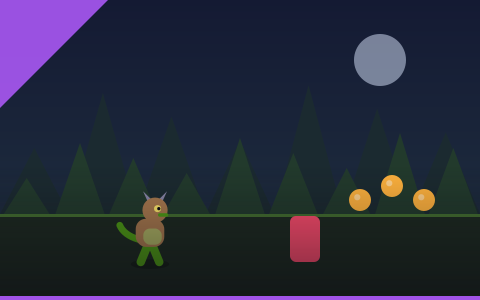
Monster Dash
Two actions, endless forest, instant restart. The best first game on the site.
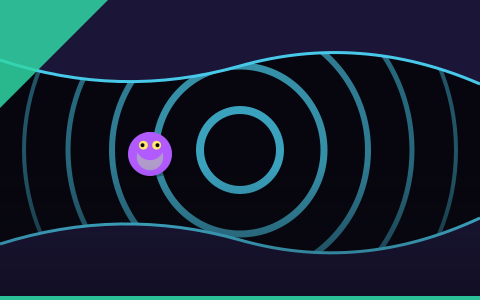
Monster Tunnel
Thread a narrowing tunnel with two inputs. The smoothest difficulty curve on the site.
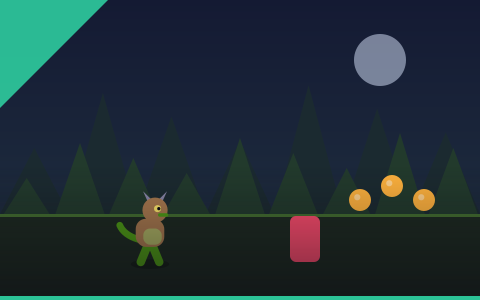
Shadow Beast
A cue appears, you answer it. Effectively a reaction-time test wearing a monster costume.