On this page
Why you die at the same distance every time
Almost every player has a wall — a distance they reach repeatedly and rarely pass. It is not a difficulty spike; the curve is smooth. It is a rhythm.
Obstacles arrive at fairly even spacing for a while because the spacing rule sets a minimum and then adds variation on top. For thirty or forty seconds that variation is small enough that a beat forms, and jumping becomes musical rather than reactive.
At the point where the game speeds up enough for spacing to visibly vary, a player locked into a beat jumps to the beat instead of to the obstacle — and that point is roughly the same distance every run. That is your wall.
The fix is uncomfortable and it works: every twenty seconds or so, deliberately jump slightly later than feels right. It breaks the metronome and forces you back into reading the screen.
Manage how long you are committed
The spacing constraint guarantees each obstacle is individually handleable. What it cannot do is protect you from your own commitment length.
A tapped jump keeps you airborne for a fraction of the time a held one does. A slide you cancel early leaves you standing sooner. A dash you save is a tool you still have. Every one of these is a decision about how long you are unavailable.
The habit worth building: default to the shortest response that clears the obstacle, and only extend it when you can see that you need to.
Greed, and when it is correct
Two runners layer collection on top, and the correct level of greed differs between them.
In Jungle Beast Run, fruit is worth substantially more than distance and the multiplier breaks on any collision — so the correct strategy is moderate greed. Take the high line when the landing is visible; skip fruit that sits directly above an obstacle, because it is placed there on purpose.
In Monster Dash, coins are a bonus rather than the score, so the correct level of greed is low. Never move to take a coin; take the ones on your path.
In Beast Run the rule is absolute: move to a lane because it is safe, never because it has something in it. Sun-stones are always placed in the riskier lane.
Giant Monster Rush plays by different rules
Giant Monster Rush inverts the category. You are the monster, obstacles break rather than block, and what ends a run is losing momentum rather than hitting something.
Three specific habits:
- Charge constantly on the ground. Speed decays every second you are not charging, and the gap between landing and resuming is pure loss.
- Leap large obstacles, smash small ones. Getting that the wrong way round is the main cause of failed runs — a large pillar stops you dead.
- Watch the smash streak. Three smashes in a row is usually the point of no return; leap the third one instead.
Session habits that outperform technique
- Warm up with three low-stakes runs. Your first run of a session is almost never your best, and treating it as practice removes the frustration of a poor start.
- Stop after three runs that end in the same place. That is the rhythm wall plus fatigue, and pushing through makes it worse.
- Change games rather than retrying. Twenty minutes across three runners beats twenty minutes on one, because classification skill transfers and rhythm does not.
- Check your best distance before you start. Knowing the number you are chasing makes the last thirty seconds of a good run much easier to play carefully.
Recovering from a bad position
Most runner deaths happen one or two seconds after the actual mistake, during the attempt to fix it. There is a better way to handle a bad position.
The instinct after a mistimed jump is to correct immediately — land, and instantly jump again, or dash to make up ground. That compounds the problem, because you are now making a second committed decision from a position you have not yet read.
The better response is to spend one beat doing nothing. Land, run, look at what is coming, and then act. A single missed collectible is a trivial cost; a second committed action taken blind is usually the run.
This is the clearest example of a decision failure rather than an execution failure, and it is why the rule is worth deciding in advance. In the moment, panic will always argue for acting immediately.
Distance runs and score runs are different runs
Most runners store both a best distance and a best score, and chasing them simultaneously is why many players get neither.
A distance run is conservative. Take the safe line, ignore collectibles that are off it, and treat every risk as unnecessary — because it is. Nothing you collect extends the run.
A score run is greedy. Chain protection and dense collection matter more than survival, and ending early with a high multiplier sustained throughout will beat a long cautious run comfortably.
Decide which one you are attempting before you start. A run that switches strategies halfway is worse at both than a committed run at either.
Key takeaways
- Your wall is a rhythm, not a difficulty spike — break it deliberately every twenty seconds.
- Default to the shortest response that clears the obstacle.
- Greed level differs by game: moderate in Jungle Beast Run, low in Monster Dash, zero for lane choice in Beast Run.
- In Giant Monster Rush, momentum is the resource — charge constantly and leap the large obstacles.
Frequently asked questions
Why do I always stop improving at the same distance?
A jumping rhythm has formed and the generator's spacing variation has caught up with it. Deliberately jumping late occasionally fixes it.
Should I collect coins in runners?
Only the ones on your path, except in Jungle Beast Run where fruit is worth more than distance and is worth a moderate detour.
Which runner should I practise on to improve at the others?
Monster Dash. Two obstacle classes and an instant restart make it the fastest place to build classification speed.
What should I do immediately after a mistake?
Does collecting items ever cost me distance?
Why do I keep dying just after a mistake rather than during one?
Is there a best lane to sit in?

Alex Morgan
Browser Games Editor & Interactive Gaming Content Specialist
Alex Morgan is the editorial byline for everything published on Monster Arcade — the design notes behind all 30 original games, the strategy guides, and the tuning decisions that set every difficulty curve on the site. More about our editorial byline.
Published · Last updated
Games mentioned in this guide
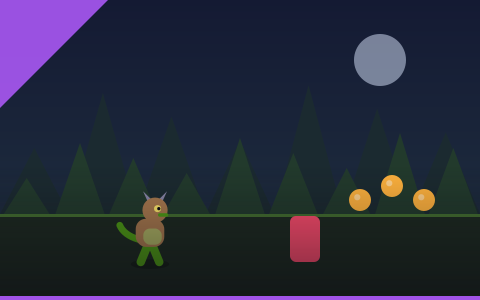
Monster Dash
Two actions, endless forest, instant restart. The best first game on the site.
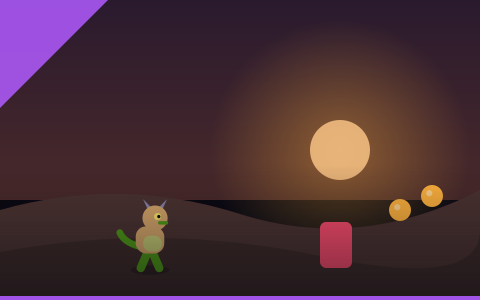
Beast Run
Three lanes across a desert canyon. Obstacles now have a horizontal dimension as well as a vertical one.

Jungle Beast Run
A runner that scores fruit as well as distance, so the safe line and the best line diverge.
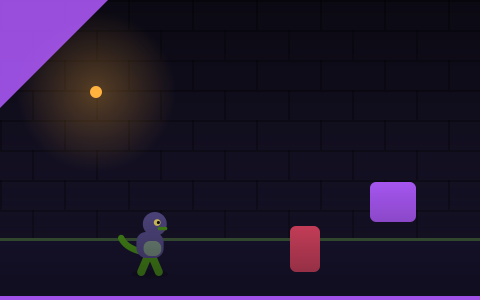
Endless Monster Run
Fully procedural, no templates, no repeats. The purest reaction test in the library.

Giant Monster Rush
You are the monster. Obstacles break instead of blocking — but breaking them still costs you speed.