
Telegraphs are the whole game
Before any enemy on this site does something that can hurt you, it does something visible that cannot. A charger crouches. A lunger rears back. A boss flashes the colour of the attack it is about to use. These windows are between a quarter and half a second long — short enough to demand attention, long enough that a human being can genuinely act on them.
This is not decoration. It is the contract that makes a battle game fair. If an attack could land without warning, the correct strategy would be to keep moving randomly forever, and the game would have no skill ceiling. Because every attack announces itself, the correct strategy is to watch, and watching is a skill that improves.
The practical consequence: in a battle game you should be looking at the enemy that is about to act, not the enemy that is closest. Proximity is a poor threat signal. A brute two steps away that has just finished an attack is safer than a lunger across the arena that has just started winding up.
How waves and rounds escalate
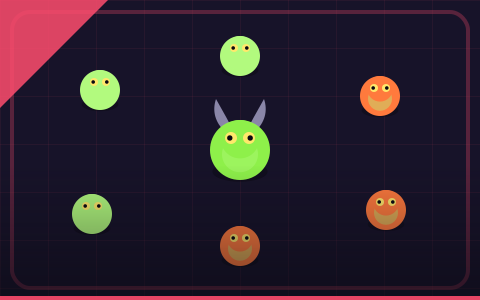
Three of the five games here are wave-based. A wave director decides how many creatures spawn, how fast they arrive, and how many may be alive at once. The count grows roughly with the square root of the wave number rather than linearly, which keeps late waves hard without making them a slideshow.
There is always a breather between waves — a couple of seconds where nothing is spawning. That pause is not generosity; it is where the game tells you what is coming, and where you are meant to reposition to the centre of the arena rather than standing wherever the last kill left you.
Monster Arena adds an upgrade choice at the end of each round. Three options, one pick, permanent for the run. The first choice matters more than any later one because it compounds across every remaining round — attack speed early beats raw damage late in almost every build we have tested.
Boss fights and phases
Two games here are built around a single large opponent rather than a crowd. Bosses run in phases: at defined health thresholds they change which attacks they use and how quickly they cycle between them. A phase change is always accompanied by a visible and audible cue, so you are never surprised by a new attack you have had no chance to see.
The standard mistake is to treat a phase change as a moment to push damage. It is the opposite — the first cycle of a new phase is the one you should spend entirely on watching, because it is the cheapest chance you will get to learn the new pattern. Give up four seconds of damage to gain a pattern you can exploit for the rest of the fight.
Bosses on Monster Arcade never gain health when you take too long, and never do unavoidable damage. If a hit felt unavoidable, there was a telegraph you did not see — which is recoverable information.
Dodging, spacing and the mid-distance trap
The most dangerous place to stand in almost every battle game is mid-distance: close enough to be reached by a lunge, far enough that you cannot punish anything. Players drift there naturally because it feels cautious.
Commit instead. Either be close enough to act during the enemy's recovery window, or far enough that every incoming attack has a travel time you can see. Ultimate Monster Challenge is the clearest demonstration: the arena is small enough that mid-distance is genuinely the worst tile on the board.
Where to start
Monster Arena is the canonical battle game and the best first choice — readable enemies, a clear round structure and the upgrade system that makes each run feel different.
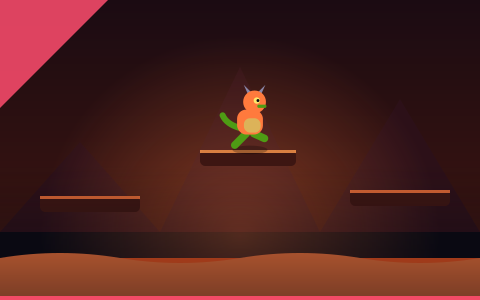
For a pure boss fight, Monster Boss Escape flips the usual framing: the boss cannot be killed, only outlasted.
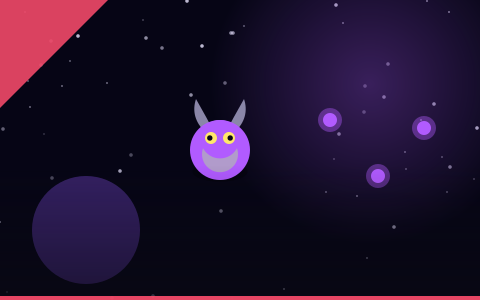
Monster Arcade Ultimate is the flagship, combining a battle stage with running and collection stages across one continuous run.
Quick tips for monster battle games
- Watch the enemy that is winding up, not the one that is closest.
- Spend the first cycle of a new boss phase watching, not attacking. It pays for itself.
- Reposition to the centre of the arena during the gap between waves, every time.
- Avoid mid-distance. Be inside punish range or outside reach — never between them.
- In Monster Arena, take attack speed with your first upgrade; it compounds hardest.
- Breaking your combo hurts more than taking a hit in most battle games. Protect the chain.
Monster Battle Games — FAQ
What are monster battle games?
Games where you fight original creatures directly, either in waves that escalate or against a single large boss with an attack pattern. The core skill is reading telegraphs — the short visible wind-up before an attack lands.
Is there any violence or gore?
No. The whole site uses a stylised arcade look with abstract particle effects rather than blood or injury. Defeated creatures burst into coloured particles.
How do boss attack patterns work?
Bosses cycle through a set of attacks in phases tied to remaining health. Each phase change is signalled visually and audibly. Our guide on recognising boss attack patterns covers how to read them quickly.
Are battle games playable on a phone?
Yes — they use a virtual stick plus attack and dodge buttons. They are the most demanding category on touch, so if you are new to mobile arcade games, start with a reflex game instead.