


One mechanic, no safety net
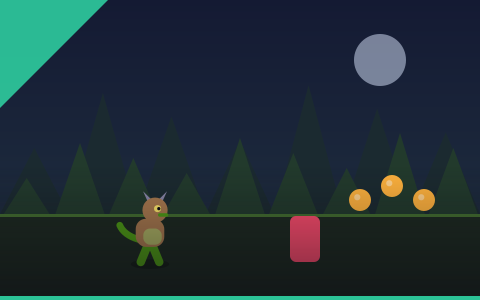
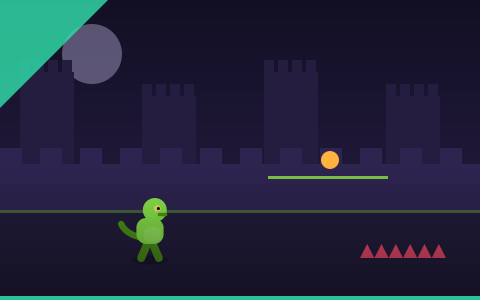
What defines this category is subtraction. There is no inventory, no route, usually no health bar, and frequently only one button. One-Tap Monster is the extreme case: a single input, and the entire game is when.
That austerity is what produces the category's characteristic feeling — total responsibility. When you lose a reflex game there is nothing to blame. No enemy spawned badly, no route was wrong, no upgrade was unlucky. You pressed at the wrong time, and you know it before the screen even changes.
It also makes these games the fairest measure of raw reaction on the site. Shadow Beast is effectively a reaction-time test wearing a costume: a cue appears, and the only variable is how long you take to respond to it.
What reaction time actually is, and what you can change
Simple visual reaction time in adults is typically in the region of 200–300 milliseconds — the gap between a cue appearing and your finger moving. That number is mostly fixed. You are not going to train your way from 280 ms to 180 ms.
What you can change is everything around it, and that is where almost all real improvement in this category comes from:
- Anticipation. Knowing a cue is likely removes most of the decision stage. This is why your fifth run is always better than your first.
- Choice cost. Reacting is fast; deciding which reaction is slow. Pre-committing to a response for each cue type removes that delay entirely.
- Gaze position. Watching where the cue will appear rather than where your creature is saves more time than any amount of practice at pressing quickly.
- Recovery. After a mistake most players stay rattled for several seconds. Resetting deliberately is worth more than reacting faster.
This is also why these games have such short runs by design. A reflex game that lasted ten minutes would be measuring endurance, not reaction.
Precision windows and how forgiving they really are
Timing windows in this category are generous at the start and tighten as the run continues. A typical first-minute window is around 180 milliseconds wide — comfortable. By the two-minute mark the same action might have 90 milliseconds, which is about as tight as we are willing to make anything, because below roughly 80 ms the game stops rewarding skill and starts rewarding luck.
Where a game grades your timing rather than simply accepting it, the grades are wide enough to aim for: a "perfect" band sits inside a larger "good" band, and hitting good repeatedly always beats hitting perfect occasionally. Chasing perfects is the most common way players lose runs they were winning.
Short sessions, real progress
Because a run is measured in seconds, this is the category that fits into a genuine spare moment. Ten attempts at Falling Monster Frenzy takes under three minutes and is enough to feel yourself getting better.
The flip side is tilt. Short runs restart instantly, which makes it very easy to take twenty attempts in a row while getting steadily worse. The practical advice that helps most people: after three failed runs that end in the same place, stop for thirty seconds. Reaction performance degrades measurably with frustration, and it recovers quickly.
Where to start
One-Tap Monster is the purest and the easiest to pick up — one button, no explanation required.
Monster Tunnel is the most hypnotic and has the smoothest difficulty curve in the category.
Monster Hunter Dash is the hardest, because it asks for timing and target selection at the same time.
Quick tips for monster reflex & skill games
- Watch where the cue will appear, not where your monster currently is.
- Decide your response to each cue type before the run, so reacting costs no decision time.
- Aim for the 'good' timing band consistently rather than chasing 'perfect'.
- Stop for thirty seconds after three runs that end the same way. Tilt is measurable.
- Keep your finger resting on the screen between taps rather than hovering above it.
- Sound on helps: audio cues arrive slightly faster than visual ones for most people.
Monster Reflex & Skill Games — FAQ
What are monster reflex games?
Short arcade games built around a single mechanic — usually one-tap timing, dodging or reacting to a cue. Runs last seconds to a couple of minutes, and scoring is based on how long you last or how many precise inputs you chain.
Can I actually improve my reaction time?
Raw reaction time is largely fixed, but almost everything around it is trainable: anticipation, gaze position, pre-committed responses and recovery after a mistake. See how to improve reaction time for the detail.
Which game is best for a two-minute break?
One-Tap Monster or Falling Monster Frenzy. Both start instantly and a full run takes well under a minute.
Are these games suitable if I find fast games stressful?
They are short, which many people find easier than a long tense run — a failure costs you fifteen seconds. But if speed itself is the problem, the adventure category is paced far more gently.